Yearly Archives: 2013
RUSI’s Trevor Taylor Gives Parliamentary Evidence on Defence Implications of Possible Scottish Independence
Posted on June 15, 2013 at 6:21 pm
RUSI News, 18 Jun 2013
Trevor Taylor, RUSI Professorial Research Fellow, spoke to the home of Commons Defence Committee, outlining the impact Scottish independence would have at the UK defence procurement.
More information here | More analysis on Scotland and defence
Further Analysis: , , ,

Posted in Security Systems
RUSI Global Security Issues Feed
Posted on June 15, 2013 at 3:37 pm
RUSI Global Security Issues Feedhttp://www.rusi.org/ web@rusi.orgen-usCopyright 2013The Risks and Rewards of other Approaches to Tridenthttp://www.rusi.org/analysis/commentary/ref:C51EEA7F5C3117/ The safety risks posed by another ‘non-continuous’ nuclear posture, as outlined in last week’s Trident Alternatives Review, are inherently subjective. Financial (as opposed to strategic) arguments may come to dominate the choices debate – something the Liberal Democrats should keep in mind.
Posted in Security Systems
After Kiruna: The Arctic Council and Arctic Futures
Posted on June 13, 2013 at 7:31 pm
RUSI Newsbrief, 24 Jun 2013 By Klaus DoddsAfter much speculation and intrigue, the official statements related to the Arctic Council ministerial meeting, hosted within the northern Swedish city of Kiruna, confirmed the reply to the question on everyone’s minds about whether China can be invited to become an observer. The solution, apparently agreed over a ministerial dinner, was ‘yes’.
With this, China and five other candidates – Japan, India, Italy, Singapore and South Korea – join states resembling Germany, the Netherlands and the united kingdom as permanent observers to the Arctic Council. Yet other candidates were less successful. The EU’s candidacy was postponed because of a dispute with Canada over a 2009 seal-product export ban. Greenpeace, a notable critic of the Arctic Council’s stance on black-carbon emissions, oil-spill response and resource-led development, also did not win an observer seat.
An understanding of 4 prevailing contexts is needed to make sense of the consequences of this ministerial meeting: the status of observers inside the Arctic Council; the new creation of a brand new grouping (the Arctic Circle); the emerging legal geographies of the Arctic region; and, finally, the competing ideas concerning the way forward for the region.
Please log in to continue reading.
Continue reading
Posted in Security Systems
Towards a change of Mexico’s Security Strategy
Posted on June 11, 2013 at 6:42 pm
RUSI Journal, Jun 2013, Vol. 158, No. 3 By Eduardo Guerrero
Mexico was battling notoriously high levels of organised-crime-related violence for years. The method adopted by the Calderón administration trusted largescale joint operations with strong military components to fight the cartels in a carteldecapitation strategy. The quick-term success of this approach was however countered by its long-term consequences, which increased cartel fragmentation and related violence. Eduardo Guerrero analyses the landscape of Mexican organised crime in 2012, its new models of organisation and recruitment strategies and suggests the fundamental challenges facing the new Peña Nieto administration if it is to devise a security strategy that can succeed in the long-term. 
Download this publication
Further Analysis: , ,
Posted in Security Systems
Police and Crime Commissioners – Is There a necessity for Stronger Scrutiny?
Posted on June 11, 2013 at 4:18 pm
RUSI Analysis, 28 May 2013
The Home Affairs Select Committee has issued a highly critical first report on Police and Crime Commissioners. Already criticised for politicising policing, the report highlights the necessity for greater scrutiny of commissioners to improve their authority within the eyes of the general public.
The Home Affairs Select Committee has issued a highly critical first report on Police and Crime Commissioners (PCCs). Its demands stronger scrutiny and more transparency and consistency within the role are usually not go unheeded. Otherwise this key law and order policy of the govt. is perhaps undermined. The issues of some must be addressed, though this could not be allowed to overshadow the dedicated work of the vast majority of PCCs.
This seriously is not a balanced report. It concentrates not at the successes but on concerns a couple of small variety of PCCs . It finds that 5 of the 41 PCCs in England and Wales have did not fulfil obligations to publish financial information by the point work at the report concluded. The Committee believes greater scrutiny locally and at a countrywide level would deter this loss of transparency.
But its biggest concern – and rightly so – is the dearth of a Register of Interests – along the lines of Chief Constables, as are those published by most others in public life. The house Affairs Select Committee has attempted to fill the vacuum and collate any such register itself. It has not been ready to get full information from every PCC even though it has some on most. Its data exposes inconsistencies in to illustrate hours worked (starting from 35 hours to 60 plus every week). It shows that many PCCs work fulltime but a minimum of seven still work as councillors and not less than five produce other part time jobs. Three PCCs are quoted as saying they see the job as a demanding, full time role. Within the light of this it will probably be a worthwhile exercise for the Committee or the govt. to study whether part time jobs are feasible, once the brand new PCCs are better bedded of their jobs – perhaps after their first year within the role.
Collating this unofficial register is a worthy exercise. It will be significant information. But it surely will be better for this to be done not by a Parliamentary Committee, but by an independent body. The report’s suggestion that this job could fall to Her Majesty’s Inspectorate of Constabulary seems sensible.
Keith Vaz MP, the Chairman of the Committee believes what’s needed is a register of interests to ‘guard against Maverick decision-making’.[1] The Committee cites evidence of what it seems that to treat as questionable actions by PCCs. It quotes person who submitted an expenses bill of £700 for 2 chauffeur driven car journeys. It draws attention to what it calls the ‘fiasco’ of the teenage Youth Commissioner who needed to resign over Twitter comments.
The Committee also refers back to the case of the Lincolnshire PCC who suspended his Chief Constable, only to have the courts overturn the verdict, with the judge noting a ‘serious error’ on his part. Within the Lincolnshire case the general public was not told why the executive Constable was suspended and the local Police and Crime Panel which must have scrutinised that suspension, did not meet for 2 months to judge the verdict, asking instead for greater clarity on its position. There’s little question this was a costly and damaging incident which highlights both the prospective power of the PCC and weaknesses within the Panel system of scrutiny.
The work of the Police and Crime Panels is very important since it is their job to hang PCCs to account. The Panels are made of elected local councillors and two independent members. Scrutiny beyond them rests in effect largely lies with the electorate, and a higher elections usually are not because of be held until 2016.
Politicisation
The report also lists five PCCs who’ve appointed a number of political contacts onto their staff on salaries of as much as £70,000. This implies as much as thirty-five other haven’t appointed former colleagues. Nevertheless the appointment of political allies, however small in number, could compound public fears which emerged in a RUSI/YouGov-Cambridge Poll published prior to PCCs were introduced in November 2012.
The poll showed public concern that PCCs, lots of whom were affiliated with political parties, could politicise policing. A key concern was the undeniable fact that scrutiny of a force would not be within the hands of a Police Authority made from around seventeen local community (mainly elected) but would pass into the hands of a single person (the PCC).
There was reason for such fears. Analysis in the house Affairs Select Committee report shows that 51.56 per cent of the 99 candidates who stood for a PCC have been or still were elected politicians and of the 41 eventually voted in, 25 had a background in politics.
Of course it could actually be that those appointed from the political world are the suitable people for the job – but without public scrutiny it’s hard to determine this indisputably.
In conclusion it sort of feels sensible to name for a countrywide register. This will ensure those PCCs who don’t declare interests or publish budgets are exposed. It should allow the general public to check PCCs and are available to an educated judgement on their performance and the appropriateness of additional jobs or income earned. And it’ll also show which PCCs are fulfilling their obligations to be transparent in regards to the public money they spend and about their personal interests.
There does, too seem like a necessity for stronger guidance and probably even extra powers for Police and Crime Panels which can be tasked with scrutinising and holding PCCs to account, but which in a lot of cases per the report, haven’t felt able or empowered to take action. They wish the boldness to query decisions they or the general public are usually not entirely proud of – including the verdict made in Lincolnshire.
This report has exposed big variations inside the standard, quality and transparency of this primary generation of PCCs. And though it fails to extrapolate from the information collected the very fact most PCCs are open, transparent and fulfilling their obligations – further scrutiny does not only enhance the authority of those PCCs but expose people that ought to be doing better.
NOTE
The Home Affairs Committee, ‘Police and Crime Commissioners: Register of Interests’, Thursday 23 May 2013 (First Report, Session 2013-14, HC 69).
Further Analysis: ,

Posted in Security Systems
Climate Change: New Dimensions of Environmental Security
Posted on June 9, 2013 at 8:25 pm
RUSI Journal, Jun 2013, Vol. 158, No. 3 By Simon Dalby
Climate change has added new impetus and urgency to the long-running discussion of environmental security, resulting in an emphasis at the overall transformation of planetary systems. Listed here, Simon Dalby argues that this requires consideration of 3 themes especially: urban vulnerabilities to extreme events; the unforeseen social and political consequences of adaptation and mitigation efforts; and the probabilities of geo-engineering. Furthermore, given the increasingly artificial circumstances that the worldwide economy is creating, security planners should now specialize in the results of further expansion of the carbon-fuelled global economy, instead of on concerns about political instabilities within the rural peripheries as a result of resource conflicts. 
Download this publication
Further Analysis: ,
Posted in Security Systems
Why Woolwich Matters: The South London Angle
Posted on June 9, 2013 at 3:42 pm
RUSI Analysis, 31 May 2013
The vivid and disgusting images witnessed in Woolwich come not necessarily from the pages of Al-Qa’ida’s Inspire magazine, but out of rap videos shot in South-East London. This is an atmosphere that mixes urban disaffection with perceived certainties from Islam.
By Professor Jonathan Githens-Mazer, Exeter University
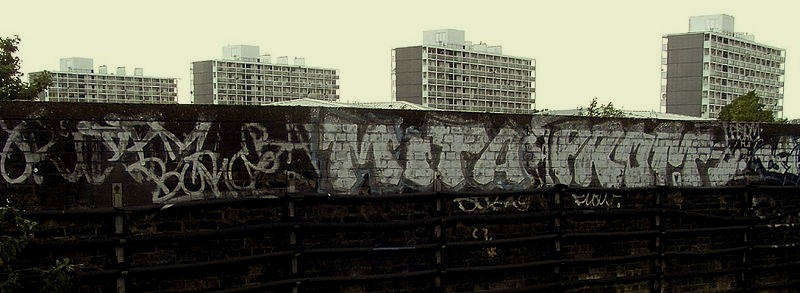
While much media coverage has foregrounded the connection between the attackers and so-called ‘extremists’, this have been to the detriment of alternative key details – namely the indisputable fact that both attackers had come from, and were active inside the South-East London Muslim scene. Analyses neglect the powerful and demanding combination of race, class, ethnicity and Islam that is often present and potent within the area.
South-East London especially Brixton, has been a frontline of radicalisation and counter-radicalisation over the last two decades, with regular confrontations between the Afro-Caribbean convert community and firebrands inclusive of Abdullah Al-Faisal and Abu Hamza as some time past as 1993. For a number of South-East London’s converts, Islam has a ‘street cred’ and Islamic vocabulary and emblems matter not only on the subject of worship, but in addition when it comes to the way in which people discuss contemporary political issues.
For example, the embrace of Islam (not less than nominally with regards to self-designation, if not actual practice) by some gangs of South-East London was (and remains) a frequently occurring phenomenon. In these instances young men, previously were involved in criminal activities including (but not limited to) gang membership, physical violence and intimidation, drug dealing, robbing (‘steaming’), property theft.
All of this is often termed as ‘Street Life’ by former and current actors; they have embraced Islam (particularly what they perceive, though many would dispute) as an observant and orthodox Salafism. Whereas individuals like Al-Faisal and Abu Hamza hoped to recruit young Muslim converts to their violent inspiring kind of Islam, Brixton Muslim communities have regularly challenged those that promoted violence within the name of Islam for 2 decades.[1]
Gangs and Islam in South-East London
One of the main aspects of this South-East London scene is the integration of Islam and the road. Something changed in South-East London gangs between 2000 and 2005.[2] For one former gang member, it was clear that ‘the Muslim thing had happened’ – that ‘the Taliban, rebellion and Islam’ were within the air. There has been a mix of lay preachers, reminiscent of Al-Faisal and Abu Hamza al-Misri and previous gang members who had converted to Islam in prisons who were all decrying the ‘West’s demonisation of Islam’ while also emphasising the racial prejudice that was seen to hamstring the potential of economic and social advancement for these same gang members.[3]
In part, this reflected the former influence of Abdullah Al-Faisal (often called Faisal al-Jamaikee), a Jamaican born Muslim lay-preacher who regularly quoted from the Qur’an and Marcus Garvey in his sermons to describe how and why Muslims have a duty to confront the evils perpetrated by (mainly white) non-Muslims in history and today. Al-Faisal regularly combined discourses of race and Islam to be able to instil a feeling of obligation to confront injustice against Muslims, and has publicly called for the murder of non-Muslims (and was convicted and imprisoned for these offences in 2003).[4]
This phenomenon was portrayed as a particular problem – where ‘radical’ Islamic groups sought to recruit (often described as ‘groom’ or ‘turn’) ‘vulnerable’ young men, who were already participating in low to mid-level criminal activities, reminiscent of robbery and drug dealing, to a kind of Islam which sanctioned violence against non-Muslims (gangs and ‘civilians’) and encouraged them to support, if not participate, in Al-Qa’ida style activities.[5]
While media reports fascinated by the capability terrorist connection, the Islamic evolution of South-East London street gangs was often less sensational but more complex. Members of gangs were often incarcerated in young offenders institutions – and spent parts in their youth lurching from street to prison and back again. As gang members embraced Islam, many attempted to depart behind illegal activity (some more successfully than others) – and turned their attention to objects like music instead of drug dealing.
The narratives of such processes of embracing Islam (talked about by people who embrace Islam as ‘reversion’) are manifold. Some undergo this process while imprisoned and/or are on remand in adult and juvenile penal facilities, others experience a more nominal shift in identity which relates more to street and gang politics than a sudden and/or dramatic shift in religious observance and lifestyle. For some, Islam is described as providing a transparent structure – a hard and fast of rules and practises that make leaving the enticements of street life behind a more achievable proposition. For others, Islam is claimed to offer a justification for robbing and committing acts of physical violence and theft against other non-Muslim gangs and non-Muslims normally.
In this technique of metamorphosis, these re-formed gangs created something relatively unique – clinging to old gang structures, but documenting a transition from a ‘street code’ to Islam. These processes of reversion as a function of ‘social protest’, disaffection with lifestyle, or due to personal crisis, are common characteristics of these who come to embrace Islam.[6] This embrace of Islam by entire gangs simultaneously reflected the ‘street rep’ (or street credibility) of Islam and a lookup personal salvation.[7] For these gangs, and on this street scene, Islam lends credibility, legitimacy and a way of power to a street rep. A Muslim gangster represents someone ‘beyond the system’, untouchable by normal laws.
From Electric Avenue to Mogadishu
For those specific people who embrace Islam within this specific niche of ‘Street Islam’ – especially in the event you embrace Islam so that it will leave behind criminality and the road, the significance of jailhouse conversion often goes unreported and underestimated. Yet, on this scene, this is a key way that many new Muslims come to locate solace of their new faith. For such individuals embracing Islam in prison, as a function of attempting to leave behind this street life and the necessity to carry a name, they feel that it’s far absolutely necessary to leave the streets physically behind. There’s a high degree of hysteria concerning the pull of the temptation of the road – and idealism that the Islamic lifestyle – and the Muslim world, will act in a utopian fashion to move the person clear of the pains and tribulations of way of life.
This leads a few of these new Muslims to hunt to travel as a part of their technique of becoming a Muslim – some wishing to move Saudi Arabia, but finding it virtually impossible to acquire a visa, some to Egypt, but again finding it very expensive to get there, and previously subject to a high degree of security scrutiny at the portion of the Egyptian authorities.
In the hot past, another destination of choice was the Yemen. Evidence for here is the observation of Yemeni fashion particularly the keffiyeh (head covering) – not worn in a conventional way, but much more likely in a ‘street’ manner (as a headscarf, for instance). The issue immediately becomes that during the present climate, Yemen is taken into account a secure haven for elements of Al-Qa’ida – so what starts as an earnest try to escape the road becomes re-construed as a possible turn to terrorism.
More recent reports indicate that young men are actually travelling to other locations in West Africa, including Nigeria and Ghana. Amongst these young men, often abroad for the primary time, and feeling a necessity to catch up on past (criminal) sins, there is potential for radicalisation or redemption – with either outcome massively difficult to foretell. In these attacks, it’s been alleged that the suspects either travelled to, or attempted to travel to Somalia.
While such Jihadi tourism is comparatively easy for the safety services to watch and disrupt, it can’t be simply understood in such contexts as reflecting a compulsion to do jihad. Living in a Muslim land, or indeed ‘defending’ a Muslim land, needs to be understood as component to a want to leave behind the theory of the impurity related to non-Muslim lands. The combo of temptations, disappointments, and perceived sordidness sit as key rationales for the way and why these individuals understand why they embraced Islam within the first place. Therefore, in these specific contexts, and popping out of the ‘South London Scene’, it needs to be contextualised in one of these way that it could be understood as portion of this like to find personal salvation.
Significance for Woolwich Attacks
The exact details of this murder becomes clearer over the arrival days, weeks and months because the Police and Security Services piece together the evidence and causes of what happened. The important points above might be roughly relevant as this evidence is available in. Some of the key links between what’s described here and the Woolwich attacks is that concept of bravado inside the face of risk – of not caring about having bloodied hands filled with knives in front of cameras and the police. At the one hand, it is a vital component to terrorism – the way a population is literally made to feel terror, yet in spite of this is a transparent section of the crowd code on this South London scene. The vivid, disgusting, and scary images come not necessarily from the pages of Al Qa’ida’s Inspire magazine, but out of rap videos shot in South-East London.
Whatever the external links can be to foreign terrorist entities, individuals, or organisations, it must be remembered that the South-East London violent extremist scene has existed for a while and isn’t subject to foreign Al-Qa’ida inspired dog-whistles. Instead, the scene here, and in other parts of urban Britain, is considered one of disaffection and tainted by a perception that everybody not from ‘the Street’ either can’t, or deliberately won’t understand ‘the Street’. Within the South-East London scene, the road can mean everything from a native estate, to post-code turf, to a selected (twisted) vision of what constitutes ‘real Islamic practice’, what’s often times spoke of in the street as ‘real talk’.
The deep investigation and introspection in an effort to follow this attack must never only bear in mind what we, as outsiders, understand because the causes of Islamically inspired terrorism, but what its meaning is within most of these communities to boot. At the streets of South-East London and other urban centres through the UK, there’s a perceived straight line between the British and American Government’s rationales of the Iraq War, MP Expenses Scandals, perceptions of discrimination in response to race, class or ethnicity, the Riots of 2011, and the Woolwich attack.
Whether this sort of straight line exists, or is even whatsoever reasonable doesn’t matter when considering why this attack happened, or the way to prevent them at some point. It’s likely that the present terrorist threat level will now worsen before it gets better – the chance of copycat events, of raised inter- and intra-community tensions, and the ever-growing threat of blowback from the slow toxic collapse of Syria tend to result in further and more profound violence.
What we will be able to expect are domestic connections: a network of emotional (though probably not tactical) support amongst those that seek to rationalise, recruit, justify, and only occasionally perpetrate most of these horrific murders. The proper we will hope for now’s that we build at the Counter-Terrorist lessons, and notable successes, over the last 20 years, and that we counter this new threat accordingly.
Jonathan Githens-Mazer is an Associate Professor in Ethno-Politics on the Institute of Arab and Islamic Studies, University of Exeter. Twitter: @githensmazer
The views expressed listed here are the author’s own and don’t necessarily reflect those of RUSI.
Notes
[1] Abdul Haqq Baker, ‘Extremists in Our Midst’, in New Securities Challenges Series edited by Stuart Croft (Basingstoke: Palgrave Macmillan, 2011).
[2] Tim Pritchard, Street Boys: 7 Kids, 1 Estate, No Way Out (London: Harper Collins, 2008).: 240
[3] Ibid.: 241
[4] Abu Ammenah AbduRahman as-Salafi and AbdulHaq al-Ashanti, Abdullah El-Faisal Al-Jamayki: A Critical Study of His Statements, Errors and Extremism in Takfeer (Luton: Jamiah Media, 2011); Baker, Extremists in Our Midst.
[5] BBC Online, ‘”Muslim’ Gangs Target Vulnerable,” (2005); Ben Ashford, Anthony France, and Tony Bonnici, ‘Bill Had a Gun Too;, The Sun, 17 February 2007.
[6] Kate Zebiri, British Muslim Converts (Oxford: One World, 2008).: 53
[7] Pritchard, Street Boys: 7 Kids, 1 Estate, No Way Out.
Further Analysis: , , ,

Posted in Security Systems
Manning the Unmanned
Posted on June 7, 2013 at 4:17 pm
In a ceremony held at Creech Air Force Base in Nevada in April, the 1st four graduates of the brand new flying branch created by the RAF for those operating remotely piloted air systems (RPAS) – or, colloquially, drones – officially received their wings. The graduates – two former air-traffic controllers, an RAF policeman and an RAF regiment officer – were participants in an RAF trial programme named Daedalus, whose aim was to evaluate the potential for training personnel with some operational but no previous flying experience to ‘fly’ unmanned aircraft. The brand new pilots will now commence operations with 39 Squadron in Nevada, flying British RPAS over Afghanistan.
Indeed, following the clear success of the Daedalus programme in training non-pilots to fly ‘unmanned’ Reaper aircraft, in December 2012 Air Chief Marshal Sir Stephen Dalton, Chief of the Air Staff, announced that the RAF can be standing up a brand new cadre of RPAS operators it is distinct from the opposite forms of pilot specialisations: combat air; multi-engine fixed wing; and rotary wing. This may allow the RAF to coach and use ab initio pilots – that’s, pilots and not using a prior flying or operational experience – on RPAS. On this way, it’s thought, the RAF can maintain the required throughput of personnel without requiring them first to finish the long – and dear – training required for other kinds of aircraft, saving the pricetag linked to what’s often irrelevant training inside the process.
Posted in Security Systems
Navigating an Ice-Free Arctic
Posted on June 7, 2013 at 3:12 pm
RUSI Journal, Jun 2013, Vol. 158, No. 3 By Lincoln E Flake
Climate change is decided to raise the controversy over maritime navigation and coastal state jurisdiction within the Arctic Ocean. Russia, with its centuries-old claim over the Northern Sea Route, is probably going to increasingly clash with proponents of navigational freedoms as receding ice makes Arctic seaborne logistics viable. Moving forward, Moscow’s Arctic posture may resemble its Near Abroad intransigence, particularly when handling foreign navies operating in Russia’s self-proclaimed area of control. Lincoln E Flake reflects on how the difficulty of freedom of navigation could pose a better risk to Arctic stability than the higher known disputes over seabed claims and competition for hydrocarbon resources.
Continue reading
Posted in Security Systems
Structuring the State: Federal Choices in Somalia
Posted on June 5, 2013 at 10:42 am
Earlier this year, Foreign Secretary William Hague used a speech on British counter-terrorism at RUSI to declare that ‘helping Somalia is a primary priority for our government’. Motivated by the continuing impact of piracy on international shipping, in addition to the terror of radicalisation amongst the British Somali diaspora, the UK’s policy on Somalia has grown significantly under the coalition government. On 25 April, Hague reopened the British embassy in Mogadishu, a symbolic capstone of the burgeoning bilateral relationship.
On 7 May, the international community will again gather in London to lend support to Somalia’s stabilisation efforts – the newest in a chain of diplomatic efforts led by the united kingdom and Turkey to place donor muscle into Somalia’s reconstruction. This engagement began in earnest in February 2012 when fifty heads of state, including representatives from the Somalia and Somaliland governments, met in London to streamline international support and inspire a timetable for political transition. The second one London Conference on Somalia will continue that support, and is concentrated at the rehabilitation of Somalia’s security forces, justice system and public finances.
The emphasis on security institutions is crucial to assist the technocratic government of Hassan Sheikh Mohamud to counter the persistent threat of Al-Shabaab, the jihadist insurgent group. Having withdrawn from the capital Mogadishu in August 2011, it remains the proverbial thorn: despite co-ordinated action by African Union, Kenyan, Ethiopian and Somali government troops to drive Al-Shabaab from its strongholds, it has proved adept at an adaptive, asymmetric campaign. Its tactics include sleeper cells, assassinations, car bombings and kidnappings: five Kenyan hostages were held since September 2011.
Posted in Security Systems