
Why Woolwich Matters: The South London Angle
Posted on June 9, 2013 at 3:42 pm
RUSI Analysis, 31 May 2013
The vivid and disgusting images witnessed in Woolwich come not necessarily from the pages of Al-Qa’ida’s Inspire magazine, but out of rap videos shot in South-East London. This is an atmosphere that mixes urban disaffection with perceived certainties from Islam.
By Professor Jonathan Githens-Mazer, Exeter University
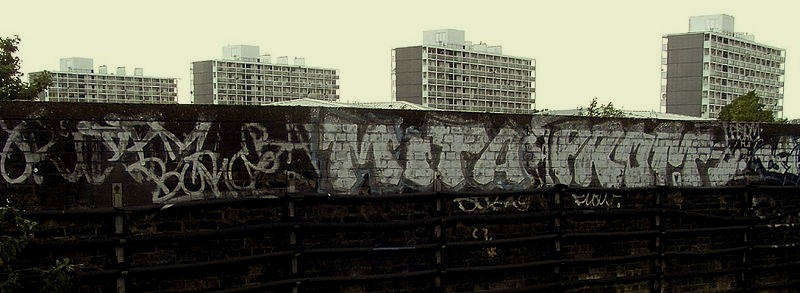
While much media coverage has foregrounded the connection between the attackers and so-called ‘extremists’, this have been to the detriment of alternative key details – namely the indisputable fact that both attackers had come from, and were active inside the South-East London Muslim scene. Analyses neglect the powerful and demanding combination of race, class, ethnicity and Islam that is often present and potent within the area.
South-East London especially Brixton, has been a frontline of radicalisation and counter-radicalisation over the last two decades, with regular confrontations between the Afro-Caribbean convert community and firebrands inclusive of Abdullah Al-Faisal and Abu Hamza as some time past as 1993. For a number of South-East London’s converts, Islam has a ‘street cred’ and Islamic vocabulary and emblems matter not only on the subject of worship, but in addition when it comes to the way in which people discuss contemporary political issues.
For example, the embrace of Islam (not less than nominally with regards to self-designation, if not actual practice) by some gangs of South-East London was (and remains) a frequently occurring phenomenon. In these instances young men, previously were involved in criminal activities including (but not limited to) gang membership, physical violence and intimidation, drug dealing, robbing (‘steaming’), property theft.
All of this is often termed as ‘Street Life’ by former and current actors; they have embraced Islam (particularly what they perceive, though many would dispute) as an observant and orthodox Salafism. Whereas individuals like Al-Faisal and Abu Hamza hoped to recruit young Muslim converts to their violent inspiring kind of Islam, Brixton Muslim communities have regularly challenged those that promoted violence within the name of Islam for 2 decades.[1]
Gangs and Islam in South-East London
One of the main aspects of this South-East London scene is the integration of Islam and the road. Something changed in South-East London gangs between 2000 and 2005.[2] For one former gang member, it was clear that ‘the Muslim thing had happened’ – that ‘the Taliban, rebellion and Islam’ were within the air. There has been a mix of lay preachers, reminiscent of Al-Faisal and Abu Hamza al-Misri and previous gang members who had converted to Islam in prisons who were all decrying the ‘West’s demonisation of Islam’ while also emphasising the racial prejudice that was seen to hamstring the potential of economic and social advancement for these same gang members.[3]
In part, this reflected the former influence of Abdullah Al-Faisal (often called Faisal al-Jamaikee), a Jamaican born Muslim lay-preacher who regularly quoted from the Qur’an and Marcus Garvey in his sermons to describe how and why Muslims have a duty to confront the evils perpetrated by (mainly white) non-Muslims in history and today. Al-Faisal regularly combined discourses of race and Islam to be able to instil a feeling of obligation to confront injustice against Muslims, and has publicly called for the murder of non-Muslims (and was convicted and imprisoned for these offences in 2003).[4]
This phenomenon was portrayed as a particular problem – where ‘radical’ Islamic groups sought to recruit (often described as ‘groom’ or ‘turn’) ‘vulnerable’ young men, who were already participating in low to mid-level criminal activities, reminiscent of robbery and drug dealing, to a kind of Islam which sanctioned violence against non-Muslims (gangs and ‘civilians’) and encouraged them to support, if not participate, in Al-Qa’ida style activities.[5]
While media reports fascinated by the capability terrorist connection, the Islamic evolution of South-East London street gangs was often less sensational but more complex. Members of gangs were often incarcerated in young offenders institutions – and spent parts in their youth lurching from street to prison and back again. As gang members embraced Islam, many attempted to depart behind illegal activity (some more successfully than others) – and turned their attention to objects like music instead of drug dealing.
The narratives of such processes of embracing Islam (talked about by people who embrace Islam as ‘reversion’) are manifold. Some undergo this process while imprisoned and/or are on remand in adult and juvenile penal facilities, others experience a more nominal shift in identity which relates more to street and gang politics than a sudden and/or dramatic shift in religious observance and lifestyle. For some, Islam is described as providing a transparent structure – a hard and fast of rules and practises that make leaving the enticements of street life behind a more achievable proposition. For others, Islam is claimed to offer a justification for robbing and committing acts of physical violence and theft against other non-Muslim gangs and non-Muslims normally.
In this technique of metamorphosis, these re-formed gangs created something relatively unique – clinging to old gang structures, but documenting a transition from a ‘street code’ to Islam. These processes of reversion as a function of ‘social protest’, disaffection with lifestyle, or due to personal crisis, are common characteristics of these who come to embrace Islam.[6] This embrace of Islam by entire gangs simultaneously reflected the ‘street rep’ (or street credibility) of Islam and a lookup personal salvation.[7] For these gangs, and on this street scene, Islam lends credibility, legitimacy and a way of power to a street rep. A Muslim gangster represents someone ‘beyond the system’, untouchable by normal laws.
From Electric Avenue to Mogadishu
For those specific people who embrace Islam within this specific niche of ‘Street Islam’ – especially in the event you embrace Islam so that it will leave behind criminality and the road, the significance of jailhouse conversion often goes unreported and underestimated. Yet, on this scene, this is a key way that many new Muslims come to locate solace of their new faith. For such individuals embracing Islam in prison, as a function of attempting to leave behind this street life and the necessity to carry a name, they feel that it’s far absolutely necessary to leave the streets physically behind. There’s a high degree of hysteria concerning the pull of the temptation of the road – and idealism that the Islamic lifestyle – and the Muslim world, will act in a utopian fashion to move the person clear of the pains and tribulations of way of life.
This leads a few of these new Muslims to hunt to travel as a part of their technique of becoming a Muslim – some wishing to move Saudi Arabia, but finding it virtually impossible to acquire a visa, some to Egypt, but again finding it very expensive to get there, and previously subject to a high degree of security scrutiny at the portion of the Egyptian authorities.
In the hot past, another destination of choice was the Yemen. Evidence for here is the observation of Yemeni fashion particularly the keffiyeh (head covering) – not worn in a conventional way, but much more likely in a ‘street’ manner (as a headscarf, for instance). The issue immediately becomes that during the present climate, Yemen is taken into account a secure haven for elements of Al-Qa’ida – so what starts as an earnest try to escape the road becomes re-construed as a possible turn to terrorism.
More recent reports indicate that young men are actually travelling to other locations in West Africa, including Nigeria and Ghana. Amongst these young men, often abroad for the primary time, and feeling a necessity to catch up on past (criminal) sins, there is potential for radicalisation or redemption – with either outcome massively difficult to foretell. In these attacks, it’s been alleged that the suspects either travelled to, or attempted to travel to Somalia.
While such Jihadi tourism is comparatively easy for the safety services to watch and disrupt, it can’t be simply understood in such contexts as reflecting a compulsion to do jihad. Living in a Muslim land, or indeed ‘defending’ a Muslim land, needs to be understood as component to a want to leave behind the theory of the impurity related to non-Muslim lands. The combo of temptations, disappointments, and perceived sordidness sit as key rationales for the way and why these individuals understand why they embraced Islam within the first place. Therefore, in these specific contexts, and popping out of the ‘South London Scene’, it needs to be contextualised in one of these way that it could be understood as portion of this like to find personal salvation.
Significance for Woolwich Attacks
The exact details of this murder becomes clearer over the arrival days, weeks and months because the Police and Security Services piece together the evidence and causes of what happened. The important points above might be roughly relevant as this evidence is available in. Some of the key links between what’s described here and the Woolwich attacks is that concept of bravado inside the face of risk – of not caring about having bloodied hands filled with knives in front of cameras and the police. At the one hand, it is a vital component to terrorism – the way a population is literally made to feel terror, yet in spite of this is a transparent section of the crowd code on this South London scene. The vivid, disgusting, and scary images come not necessarily from the pages of Al Qa’ida’s Inspire magazine, but out of rap videos shot in South-East London.
Whatever the external links can be to foreign terrorist entities, individuals, or organisations, it must be remembered that the South-East London violent extremist scene has existed for a while and isn’t subject to foreign Al-Qa’ida inspired dog-whistles. Instead, the scene here, and in other parts of urban Britain, is considered one of disaffection and tainted by a perception that everybody not from ‘the Street’ either can’t, or deliberately won’t understand ‘the Street’. Within the South-East London scene, the road can mean everything from a native estate, to post-code turf, to a selected (twisted) vision of what constitutes ‘real Islamic practice’, what’s often times spoke of in the street as ‘real talk’.
The deep investigation and introspection in an effort to follow this attack must never only bear in mind what we, as outsiders, understand because the causes of Islamically inspired terrorism, but what its meaning is within most of these communities to boot. At the streets of South-East London and other urban centres through the UK, there’s a perceived straight line between the British and American Government’s rationales of the Iraq War, MP Expenses Scandals, perceptions of discrimination in response to race, class or ethnicity, the Riots of 2011, and the Woolwich attack.
Whether this sort of straight line exists, or is even whatsoever reasonable doesn’t matter when considering why this attack happened, or the way to prevent them at some point. It’s likely that the present terrorist threat level will now worsen before it gets better – the chance of copycat events, of raised inter- and intra-community tensions, and the ever-growing threat of blowback from the slow toxic collapse of Syria tend to result in further and more profound violence.
What we will be able to expect are domestic connections: a network of emotional (though probably not tactical) support amongst those that seek to rationalise, recruit, justify, and only occasionally perpetrate most of these horrific murders. The proper we will hope for now’s that we build at the Counter-Terrorist lessons, and notable successes, over the last 20 years, and that we counter this new threat accordingly.
Jonathan Githens-Mazer is an Associate Professor in Ethno-Politics on the Institute of Arab and Islamic Studies, University of Exeter. Twitter: @githensmazer
The views expressed listed here are the author’s own and don’t necessarily reflect those of RUSI.
Notes
[1] Abdul Haqq Baker, ‘Extremists in Our Midst’, in New Securities Challenges Series edited by Stuart Croft (Basingstoke: Palgrave Macmillan, 2011).
[2] Tim Pritchard, Street Boys: 7 Kids, 1 Estate, No Way Out (London: Harper Collins, 2008).: 240
[3] Ibid.: 241
[4] Abu Ammenah AbduRahman as-Salafi and AbdulHaq al-Ashanti, Abdullah El-Faisal Al-Jamayki: A Critical Study of His Statements, Errors and Extremism in Takfeer (Luton: Jamiah Media, 2011); Baker, Extremists in Our Midst.
[5] BBC Online, ‘”Muslim’ Gangs Target Vulnerable,” (2005); Ben Ashford, Anthony France, and Tony Bonnici, ‘Bill Had a Gun Too;, The Sun, 17 February 2007.
[6] Kate Zebiri, British Muslim Converts (Oxford: One World, 2008).: 53
[7] Pritchard, Street Boys: 7 Kids, 1 Estate, No Way Out.
Further Analysis: , , ,

Posted in Security Systems