
Police and Crime Commissioners – Is There a necessity for Stronger Scrutiny?
Posted on June 11, 2013 at 4:18 pm
RUSI Analysis, 28 May 2013
The Home Affairs Select Committee has issued a highly critical first report on Police and Crime Commissioners. Already criticised for politicising policing, the report highlights the necessity for greater scrutiny of commissioners to improve their authority within the eyes of the general public.
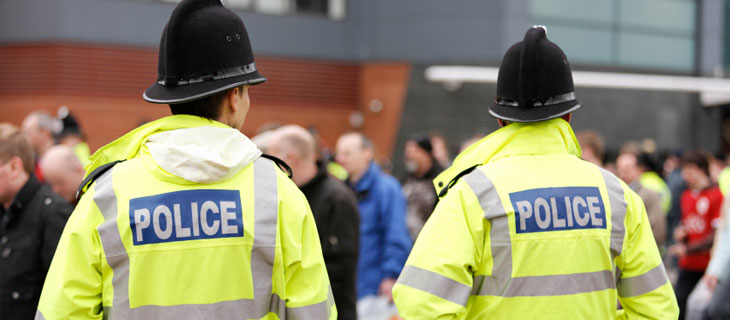
The Home Affairs Select Committee has issued a highly critical first report on Police and Crime Commissioners (PCCs). Its demands stronger scrutiny and more transparency and consistency within the role are usually not go unheeded. Otherwise this key law and order policy of the govt. is perhaps undermined. The issues of some must be addressed, though this could not be allowed to overshadow the dedicated work of the vast majority of PCCs.
This seriously is not a balanced report. It concentrates not at the successes but on concerns a couple of small variety of PCCs . It finds that 5 of the 41 PCCs in England and Wales have did not fulfil obligations to publish financial information by the point work at the report concluded. The Committee believes greater scrutiny locally and at a countrywide level would deter this loss of transparency.
But its biggest concern – and rightly so – is the dearth of a Register of Interests – along the lines of Chief Constables, as are those published by most others in public life. The house Affairs Select Committee has attempted to fill the vacuum and collate any such register itself. It has not been ready to get full information from every PCC even though it has some on most. Its data exposes inconsistencies in to illustrate hours worked (starting from 35 hours to 60 plus every week). It shows that many PCCs work fulltime but a minimum of seven still work as councillors and not less than five produce other part time jobs. Three PCCs are quoted as saying they see the job as a demanding, full time role. Within the light of this it will probably be a worthwhile exercise for the Committee or the govt. to study whether part time jobs are feasible, once the brand new PCCs are better bedded of their jobs – perhaps after their first year within the role.
Collating this unofficial register is a worthy exercise. It will be significant information. But it surely will be better for this to be done not by a Parliamentary Committee, but by an independent body. The report’s suggestion that this job could fall to Her Majesty’s Inspectorate of Constabulary seems sensible.
Keith Vaz MP, the Chairman of the Committee believes what’s needed is a register of interests to ‘guard against Maverick decision-making’.[1] The Committee cites evidence of what it seems that to treat as questionable actions by PCCs. It quotes person who submitted an expenses bill of £700 for 2 chauffeur driven car journeys. It draws attention to what it calls the ‘fiasco’ of the teenage Youth Commissioner who needed to resign over Twitter comments.
The Committee also refers back to the case of the Lincolnshire PCC who suspended his Chief Constable, only to have the courts overturn the verdict, with the judge noting a ‘serious error’ on his part. Within the Lincolnshire case the general public was not told why the executive Constable was suspended and the local Police and Crime Panel which must have scrutinised that suspension, did not meet for 2 months to judge the verdict, asking instead for greater clarity on its position. There’s little question this was a costly and damaging incident which highlights both the prospective power of the PCC and weaknesses within the Panel system of scrutiny.
The work of the Police and Crime Panels is very important since it is their job to hang PCCs to account. The Panels are made of elected local councillors and two independent members. Scrutiny beyond them rests in effect largely lies with the electorate, and a higher elections usually are not because of be held until 2016.
Politicisation
The report also lists five PCCs who’ve appointed a number of political contacts onto their staff on salaries of as much as £70,000. This implies as much as thirty-five other haven’t appointed former colleagues. Nevertheless the appointment of political allies, however small in number, could compound public fears which emerged in a RUSI/YouGov-Cambridge Poll published prior to PCCs were introduced in November 2012.
The poll showed public concern that PCCs, lots of whom were affiliated with political parties, could politicise policing. A key concern was the undeniable fact that scrutiny of a force would not be within the hands of a Police Authority made from around seventeen local community (mainly elected) but would pass into the hands of a single person (the PCC).
There was reason for such fears. Analysis in the house Affairs Select Committee report shows that 51.56 per cent of the 99 candidates who stood for a PCC have been or still were elected politicians and of the 41 eventually voted in, 25 had a background in politics.
Of course it could actually be that those appointed from the political world are the suitable people for the job – but without public scrutiny it’s hard to determine this indisputably.
In conclusion it sort of feels sensible to name for a countrywide register. This will ensure those PCCs who don’t declare interests or publish budgets are exposed. It should allow the general public to check PCCs and are available to an educated judgement on their performance and the appropriateness of additional jobs or income earned. And it’ll also show which PCCs are fulfilling their obligations to be transparent in regards to the public money they spend and about their personal interests.
There does, too seem like a necessity for stronger guidance and probably even extra powers for Police and Crime Panels which can be tasked with scrutinising and holding PCCs to account, but which in a lot of cases per the report, haven’t felt able or empowered to take action. They wish the boldness to query decisions they or the general public are usually not entirely proud of – including the verdict made in Lincolnshire.
This report has exposed big variations inside the standard, quality and transparency of this primary generation of PCCs. And though it fails to extrapolate from the information collected the very fact most PCCs are open, transparent and fulfilling their obligations – further scrutiny does not only enhance the authority of those PCCs but expose people that ought to be doing better.
NOTE
The Home Affairs Committee, ‘Police and Crime Commissioners: Register of Interests’, Thursday 23 May 2013 (First Report, Session 2013-14, HC 69).
Further Analysis: ,

Posted in Security Systems