Yearly Archives: 2013
National Risk Register: Striking a Balance Between Preparedness and Preparing a Response
Posted on July 5, 2013 at 8:39 pm
RUSI Analysis, 26 Jul 2013 By Jennifer Cole, Senior Research Fellow, Resilience & Emergency Management
Now at its third iteration, the UK’s National Risk Register was praised internationally for giving an official stock take of threats and hazards facing the rustic. However, a more proactive Register would help to enlarge the main focus from emergency preparedness and response towards more prevention and vulnerability reduction.
 The UK’s National Risk Register (NRR), an unclassified and public version of the threats and hazards the rustic faces, is rightly admired by the international community. Virtually all the threats (man-made attacks equivalent to terrorism and cyber attack) and hazards it lists (natural events resembling flooding, heatwaves and pandemic flu) , require greater than just government action to deal with them. The personal sector operators of electricity companies, water companies, transport utilities and the companies on which any community depends want to plan for and mitigate risks, as do the emergency services and native governments. In order to take action, they have to be fully conversant in what those risks can be.
Similarly, the more the majority can do to make themselves and their homes resilient, the more resilient their communities and the united kingdom as a complete, turns into. Measures would come with checking whether they live in a space vulnerable to flooding, understanding simple cyber security practices which includes using strong passwords and spotting obvious attempts at financial fraud, to benefiting from seasonal flu vaccinations. The NRR allows all sectors of society – public sector, private sector, and the general public themselves – to devise and get ready together.
Where the NRR works less well, however, is as an early warning system to drive emergency preparedness and planning well beforehand. The National Risk Assessment (which considers risk on a five-year horizon), and National Security Risk Assessment (which looks further ahead, to 20 years out, and informs the NRA which, in turn, informs the NRR), can be more beneficial in the event that they could move emerging risks onto the NRR more quickly, before their impact is felt other than immediately afterwards. The last two iterations of the register have included four new categories. Three of those (two distinct kinds of volcanic volcano hazards – ash cloud and gas-rich effusion – plus social disruption and wildfires) were added on reflection. They were done only after serious disruption was as a result of such events. Only the fourth category – severe space weather – was added predictively.
Placing Risks at the Register
It is, in fact, difficult if not impossible to foresee the genuinely unexpected – let’s say, the spread of effects following the severe volcanic eruption in Iceland in 2010 .- Nevertheless it must be easier to foretell certain consequences, along with severe pollution or disruption to airline services leaving large numbers of UK citizens stranded overseas and wanting some Foreign and Commonwealth Office assistance. It was not rather a lot the volcanic eruption itself that was the hazard to the united kingdom, however the subsequent disruptive effects it caused. Pollution was a significant issue through the Foot and Mouth Disease outbreak on the turn of this century, because of the large numbers of carcasses burned on open pyres. Moreover, the issue posed by stranded travellers was experienced more recently when severe ice and snow closed the Channel Tunnel in 2009.
We can equally question why it has taken goodbye for wildfires to seem at the register when their frequency and intensity have been steadily increasing over recent years as summers become hotter and drier across ever more northerly areas of Europe. They were particularly fierce inside the UK in 2011 and 2012, but this could were not more unexpected or difficult to foretell on past experience than a flu pandemic. Had they appeared at the NRR sooner, Local Authorities and native Resilience Forums could have been more inclined to plot a collective response that encompassed the abilities and assets of greater than just the local Fire and Rescue Services. A lot of these risks ‘bubble under’ at the reserve list of the NRSA and NRA before their actual occurrence promotes them, but a lot of the folks who must plan for them don’t always see these longer, classified versions. It is very important consider how the NRR is used, and by whom, in addition to what it represents.
Pandemic flu, as an instance, is a totally specific risk to have at the register, which can easily be expanded to incorporate ‘serious infectious disease’ often. The sort of move would enable among the measures had to mitigate an endemic of any disease to be fully planned for, and would also go far to tackling antimicrobial resistance, that’s currently dealing with the National Security Risk Assessment process for possible inclusion in its own right, to be considered immediately. To have one single infectious disease – influenza – alone on the top of the register, with all less serious diseases considered together in a separate but discrete grouping lower down makes less sense than a gradated scale.
With the above in mind, a very strange decision on this new iteration of the register is the only to mix zoonotic diseases (those who can transfer from animals to humans) with non-zoonotic animal diseases in one ‘animal disease’ category. The response required for an animal health emergency, resembling a Foot and Mouth outbreak or BSE, is considerably different to that required for H5N1, or ‘Bird Flu’ or, actually for the H1N1 strain liable for the hot ‘Swine Flu’ pandemic. The implications of the previous are largely to the security of the food chain and impact at the agricultural industry, while the latter affects human health and the NHS. No matter their origins, the dangers posed by zoonotic diseases correlate more with those from SARS and the present pathogen-du-jour, the coranovirus liable for Middle East Respiratory Syndrome (MERS). Zoonotic diseases are more such as a food chain supply disruption or environmental contamination.
The way during which the NRR silos threats and hazards doesn’t make explicit the link between the increasing incidence of diseases akin to Blue Tongue or West Nile Fever and climate change: they’re being carried further north as warmer air currents, and more favourable conditions, allow the mosquitoes that carry them to penetrate Northern Europe and North America. If truth be told, the foundation cause – climate change -has brought wildfires onto the NRR. Again, while the Climate Change Risk Assessment feeds the NRA, this would possibly not be explicit to the tip users of the NRR.
A Holistic View of Resilience
Approaching the NRR on this way would help to handle the troubles of the hot Peer Review Report of the uk 2013, Building resilience to disasters: Assessing the implementation of the Hyogo Framework for Action (2005-2015) that the united kingdom must do more to stop, in addition to reply to, emerging risks. It may well do so by making the links between these risks more explicit, which in turn would encourage responses that handle both the causes and the indications and would help to construct resilience from the lowest up in addition to the pinnacle down by enabling emergency planners, responders and community members to take a more holistic view of resilience.
In truth, however, the above points are largely a nitpicking exercise, searching for holes in an approach the united kingdom has pioneered and which it’s largely better at than many other countries. The Civil Contingencies Act is below a decade old, the NRR was public for under half that, and it’s only now that countries comparable to america are following the UK’s example. True resilience will take a little time longer yet to bed down. The Hyogo Peer Review praises our ability to integrate science into policy and rightly commends initiatives equivalent to the Natural Hazards Partnerships, the Local Resilience Forums structure and the willingness to provide the general public a stake of their own resilience.
The UK has come a ways because the ‘Four Fs’ challenges to resilience that happened on the turn of the century: flooding, Foot and Mouth, the Firefighters’ strike and the fuel protests prompted an overhaul of how we approach civil emergencies. There’s still a way to move, however the direction is obvious. Perhaps this can be the time to step back from the NRR and look not just the isolated threats and hazards placed across it, but to take a more holistic view of what links them together, and what are the foundation causes of the vulnerabilities – to create a Venn diagram of the cause and effect of risks in addition to only a graph in their relative likelihood and impact.
This can also encourage a more forward-looking approach at local in addition to national level that assesses the temporal and geographic proximity of risks to the united kingdom and will be prone to place emerging risks at the NRR before their impact is felt. There should still be a volcano that catches us unawares, however the consequences must be foreseeable, if not the cause. Because the Hyogo Peer Review has identified, our next priority must be prevention, strengthening the approach of the National Security Risk Assessment and the National Risk Assessment in order that no event, irrespective of how unexpected, is probably going to catch the united kingdom completely unawares.
Further Analysis: , , , ,

Posted in Security Systems
Iran’s Nuclear Diplomacy: How the Gulf Feels Threatened
Posted on July 5, 2013 at 2:54 pm
RUSI Analysis, 18 Feb 2014
Stoking sectarianism, threatening stability and interfering in sovereign countries: Iran already is a source of instability to Gulf countries even with no deal on its nuclear programme. Feeling vulnerable, Gulf countries may look to US alternatives to ensure their security.
By Omar Mahmood for RUSI.org

This article is a part of RUSI’s ongoing series charting regional responses to Iran’s Nuclear Diplomacy.
Bahrain – These are crucial times for the Gulf region. The present nuclear deal between Iran and the West have been viewed with much pessimism during the world or even more so amongst the Arab Gulf states. What must be understood from the Gulf states perspective regarding Iran’s nuclear ambitions isn’t the fear of Iran ever using a nuclear bomb but of the ability holding any such weapon brings.
A key issue that’s not given much attention in all of the talks a couple of nuclear Iran are the non-nuclear abilities Iran is currently building, which might likely increase tenfold if Iran ever went nuclear. The best threat to the Gulf Cooperation Council (GCC) is Iran’s asymmetric capabilities. The reaction of the Gulf states, especially Saudi Arabia isn’t one out of vexation but of genuine concern regarding these capabilities.
Iran is currently within the means of developing precision guided missiles, that are more of a genuine world threat then nuclear weapons would ever be. Their asymmetric naval capabilities are a true threat to the shipping lanes or even against much bigger (and slower) US ships. Iran currently has thousands of sea mines in its possession, and likewise possesses an array of short and long range anti-ship missiles.
Another fear of a nuclear Iran is the expansionist policies Iran would be at liberty to pursue due a scarcity of a major threat against it if it ever went nuclear. Iran would further heavily put money into Lebanon, Syria and Iraq, further bringing these states into its orbit, that is seen with real fear in Riyadh. A question that has also been neglected is the expansion of sectarian tensions inside the region which might take place through Iran’s increased political clout if it were to have a weaponised nuclear programme. Iran’s interference inside the Gulf states would doubtless increase, which might probably also cause more of a rift between the several sects and their relations with the governments of the Gulf States.
The Gulf states, excluding Saudi Arabia, all lack strategic depth, that is also among the many many reasons each Gulf states’ policy towards Iran differ. As mentioned inside the paper, for now, the Gulf states haven’t any choice but to depend upon america as a safety guarantor and partner. Gulf militaries have heavily invested in US military technology and weaponry, and it’d require decades and billions of bucks to buy new weapons and systems from countries similar to China or Russia for instance.
No doubt the Gulf States face a conundrum, States along with Saudi Arabia currently wouldn’t have the facility to directly affect any nuclear deal made with Iran. For now the single viable options the Gulf States have are diplomatic and political. While Saudi Arabia and the UAE are pursuing civilian nuclear programmes, many doubt they might expand this into the area of nuclear weapons. Saudi Arabia would face intense international pressure and threats of sanctions if it were to move ahead with its threats.
This leaves the Gulf states with a couple of options; the primary could be to expand diplomatic, political and economic ties with countries together with India and China (which they’ve been). Both China and India have close relations with Iran and the Gulf states could use this to their advantage.
Second, the Gulf states should get their very own houses so as, to house a potentially nuclear Iran. This will likely require sacrifices, and following through on years of exceptional intra-Gulf deals and agreements that have yet to be implemented and putting aside their personal quarrels. Increasing Gulf military and defence cooperation is very important, coordinating weapons purchases, military exercises, and finding lasting solutions to the political issues that affect lots of the GCC states. This can require patience and won’t be achieved over night.
A few of the GCC leaders recently met privately to minimize any perceived tensions between them and strengthen ties. Certainly, there’s a sense of newfound hope in regards to the new Emir of Qatar who’s believed to be less intrusive and more consistent with the remainder of the GCC. Oman has always been different in its policies and traditions; the largest threat Oman believes itself to stand is a good stronger and bullish Saudi Arabia, for you to force its own objectives at the remainder of the GCC states. Many inside the Omani government believe that forming a Gulf Union currently isn’t realistic, observing the undeniable fact that such a lot of GCC initiatives haven’t begun to bear fruit. Saudi Arabia and the GCC states have to address these concerns and start the implementation of earlier initiatives.
The US should take these concerns seriously and understand why lots of the regions states have publicly questioned the present nuclear focus on Iran and examine america commitment to the region, especially the Gulf, with suspicion. The united states has spoken lots about its ongoing commitment to the region, but perhaps it must put words into actions. While the choices of the Gulf states are limited in regards to the nuclear deal, america should note that the Gulf states aren’t minor players within the region. The GCC is among the biggest buyers folks weaponry, and it holds significant influence amongst other nations inside the region, which it may use to undermine or disrupt US policies and objectives if ties were to ever sour further. The GCC will always be a big player within the Middle East and an easier alternative to the Arab League.
To the GCC states, an Iran another time integrated into the international order, won’t change its asymmetric behaviour, throughout the various means it employs within the region. Finally, a couple of questions have to be asked; if the deal is successful, what does it mean for the long run security architecture of the region? What role will the united states play in integrating Iran into this new architecture? How will civil war in Syria and internal conflict in Yemen and Iraq play out inside the relations between the Gulf and Iran, whether Iran’s nuclear programme becomes weaponised or not?
Omar Mohamed is currently a Research Analyst at DERASAT Bahrain, with a level in Peace and Conflict Studies with Economics.
Further Analysis: , , , ,

Posted in Security Systems
Nuclear Diplomacy with North Korea: Over Before it all started?
Posted on July 3, 2013 at 3:43 pm
RUSI Newsbrief, 15 Jan 2014 By Joshua PollackCommercial space images published over the process 2013 have revealed considerable activity at North Korea’s nuclear complex at Yongbyon. a brand new, ‘experimental’ light-water reactor project seems to be complete externally, and the previously disabled gas-cooled, graphite moderated reactor – the source of North Korea’s plutonium – appears to have recommenced operations in late August or early September. The roof of the recent gas-centrifuge uranium-enrichment facility shown to researchers from Stanford University’s Center for International Security and Cooperation in November 2010 has doubled in area.
These changes suggest a growing distance between North Korea’s formal commitment to denuclearisation under the discontinued Six-Party Talks (with South Korea, Japan, China, Russia and the usa) and the entrenched reality of its nuclear programmes. They correspond to Pyongyang’s declaration in April 2013 that it’s going to ‘adjust’, ‘alter the uses’ of, and ‘restart’ the facilities at Yongbyon. In step with the North Korean authorities, these moves support a ‘new strategic line’ of simultaneously developing both nuclear weapons and the North Korean economy.
Please log in to continue reading.
Continue reading
Posted in Security Systems
The National Risk Register’s Value to Business and Communities
Posted on July 3, 2013 at 12:54 pm
RUSI Analysis, 26 Jul 2013 By John Tesh CBE, Associate Fellow
The 2013 National Risk Register (NRR) of civil emergencies was published by the govt. on 11 July. The danger profile for many communities and businesses remains complex and unpredictable, heightening the cost of the overall measures of resilience and business continuity planning that the NRR promotes.

What is the National Risk Register?
The National Risk Register (NRR) is a list of the major sorts of emergency which can affect public, private and voluntary sector organisations and businesses, and members of the general public within the UK.
The first NRR was a fabricated from the primary National Security Strategy in 2008. This concluded that the UK’s domestic risk profile was complicated and hard to foretell and, in its most extreme forms, potentially as dangerous as international security threats. a better level of national resilience was needed, as portion of a methodology to advertise not only the safety of the nation but in addition the security of its people.
Resilience – even then a comparatively new term inside the security lexicon – comprised the flexibility to anticipate, reply to, maintain essential supplies and services throughout, and get over, quite a lot of emergencies. Professional front line responders would have a major responsibility. But, especially in larger scale emergencies, resilience was everyone’s business. And knowledge at the risks must be a lot more widely available.
The obvious source of knowledge was the National Risk Assessment (NRA) – a confidential assessment of the hazards of all types of emergency updated by the cupboard Office annually since 2005. The NRA assesses the possibility and certain impact of a few 80 to 90 kinds of emergency. In 2010 it provided much of the underpinning evidence for the Government’s National Security Risk Assessment, supplying examples of the key domestic risks posed by international terrorism, natural hazards, and cyber attacks.
Producing a public risk register brought obvious challenges: public mistrust of presidency publications of this type; and the right way to set out enough detail to be useful without itemising every kind of emergency, or implying that the past is anticipated to copy itself sooner or later. The 2008 model of a transparent but dispassionate document, designed to tell but not compel work by organisations to enhance their resilience, have been built on. But later editions were less inhibited by considerations of classification – a big problem given the secrecy surrounding much of the government’s risk assessment work – and more driven by what people have said they need to grasp and by advances inside the science of emergency risk assessment. The 2013 edition follows this trend, being more open both in regards to the risks and about what’s not within the register.
What Does the 2013 National Risk Register Show?
This is demonstrated most clearly inside the matrices on page 10 of the Register. These provide broad-order comparisons, using a scale for comparing likelihood where the bottom probability events are four orders of magnitude less likely than the best. The impact scale is in a similar fashion stepped. Taking the ‘top tier’ of risks inside the National Security Risk assessment first, the NRR shows that:
- The highest impact risks posed by international terrorism are that terrorists might obtain effective mass impact biological agents or a functioning nuclear device. The possibility of this happening within the following couple of years is expounded to be low but not negligible. These remain a central authority priority for the ‘Prepare’ programme under the ‘Contest’ strategy.
- The highest risks of natural disasters are of an influenza pandemic, coastal flooding, and a gas-rich volcanic effusion at the scale of the 1783-84 Laki eruption in Iceland. The latter is distinguished from the ‘ash cloud’ risk which scientific opinion rates the lesser of 2 forms of risk from Icelandic volcanic eruptions.
- Interestingly, the NRR is more sanguine concerning the near term risks of cyber attack than the NSRA is for the long run, both reflecting a central authority view that the hazards listed below are prone to grow because the UK economy and its peoples’ life-style increasingly depend on the net.
The more common risks fall within the low to mid range of impact – serious but not game-changing within the way disasters in say Japan could be. Their disruptive effects are sometimes more pronounced than the threat they pose to life and limb. Of these, the events likely to disrupt our lives are, unsurprisingly:
- Extremes of weather: an increasing feature of life in Britain because the climate continues to alter, or even as average temperatures and sea levels continue gradually to extend: the extremes include low temperatures and heavy snow but in addition heatwaves, storms and gales.
- The consequent risks – also rising over the years – of inland flooding, and conversely of drought particularly in water-stressed areas of the South-East, which the government’s 2012 climate change risk assessment has identified as two of the early onset symptoms of climate change. The hot kid at the block this is the chance of severe wildfire, particularly at the urban fringes, with the 2011 Swinley Forest providing a cautionary tale.
- Relatively localised terrorist attacks using ‘conventional’ weapons (bombs or firearms). During this the NRR follows the assessment within the latest annual Contest report that, although depleted in numbers and capability, Al-Qa’ida remains able to conducting terrorist attacks inside the UK and other countries, and that Al Qa’ida affiliates around the globe became a comparatively greater threat of their own right to UK interests including on this country.
- Risks of non-pandemic infectious disease – with the danger of SARS providing the reasonable worst case pending a review of those risks that needs to take note of the manager Medical Officer’s concerns about anti-microbial resistance. The NRR also notes the rising risk of zoonotic and non-zoonotic animal disease which – because the 2001 and 2007 outbreaks of Foot and Mouth Disease showed – may cause significant disruption even if the outbreaks are effectively contained as they were in 2007.
What Does it not Show?
To those using the NRR to enhance their preparedness for emergencies, knowing what it doesn’t cover can also be important. Adoption of the definition of an emergency from the Civil Contingencies Act, and a definition of likelihood that excludes implausible events or those whose return periods will not be known and can’t be guessed, implies that the NRR is not going to assess the possibility of serious asteroid strikes or earthquakes in populated areas although these are at the ‘reserve list’ of risks which the cupboard Office maintains for annual review. The NRR eschews ‘composite’ emergencies where two or more other kinds of emergency coincide, for the reason that difficulties of assessing likelihood here will be formidable. Everyday events equivalent to street crime, which many would view as being more threatening than large scale disasters., are excluded because the purpose of the NRR is to aid the nation and its people handle unusual circumstances as opposed to to itemise all the pieces that may make life a misery.
Assessment
In 2009, the OECD praised the NRR as ‘innovative best practice in risk communication to the public’, observing that its publication was “the beginning of a dialogue with the general public” and so – in effect – praising the initiative while reserving judgment on how effective this was more likely to be.
Five years later, the product is still improved, and portion of this seems to be as a result of increased demand from one of many key stakeholders: businesses increasingly curious about business continuity but strapped for resources and wanting an accessible, objective, but authoritative catalogue of emergency planning scenarios.
Infrastructure Resilience
Pressure from big businesses, particular within the infrastructure sectors, to make accessible more of the detail underpinning the National Risk Register is growing. Key business sectors are showing a better interest in embedding disaster risk management of their business processes, and to comprehend the character of a few of the dangers – just like the risks of non-nuclear electro-magnetic pulses emanating from the sun – which require the type of cross-disciplinary scientific analysis it is increasingly the hall-mark of the NRA.
This year’s Global Assessment Report on Disaster Risk Reduction (GAR ’13), highlighting the effect of disasters on long-term business competitiveness and sustainability, will whet business appetite for objective data at the risks. And the publication of ‘sector resilience plans’ for every of the most UK national infrastructure sectors shows that there’s at the very least the beginnings of a move to balance investment in reducing vulnerabilities with business continuity; and to factor the future risks into investment plans for brand spanking new build infrastructure.
Business Continuity
In the meantime, government efforts to advertise business resilience – including publication within the NRR of entry level data on risks to business – could have helped to advertise the broader reason behind improved business continuity planning. A 2012 CMI survey[i] showed that, between 2008 and 2012, business continuity management increased from 42% to 60% in not-for-profit organisations surveyed, and from 43% to 52% in private sector organisations. Business continuity planning in medium sized organisations increased from 42% to 61%; but micro and small businesses still lag behind for the apparent reason that they probably think they can not afford even an entry level investment in resilience. The collaborative, public/private sector, publication of a ‘Dummies’ Guide’ to business continuity – in keeping with the NRR – may change that.
Community Resilience
The NRR – and community risk registers which tailor the national risk picture to local circumstances – was a status reference document for Community Resilience since 2008. The hot Peer Review Report of the UK’s progress in implementing the Hyogo Framework for Action on Disaster Risk Reduction (HFA), while generally complimentary of the UK’s efforts, points to the difficulties:
‘The public has access to lots of knowledge, but it surely just isn’t clear whether people actually take action in keeping with this risk information. It sounds as if … citizens aren’t yet especially willing to do so themselves at the ground …. changing people’s behaviour and making individuals personally responsible remains a challenge: the culture of prevention and risk awareness continues to be seen as low (reportedly around 12 per cent one of the general population).’
In resilience, as in such a lot of other areas of public policy, it remain the case that you’ll be able to take a horse to water but can’t force it to drink.
Note
1. The Chartered Management Institute: ‘Planning for the worst: the 2012 Business Continuity Management Survey’, March 2012
Further Analysis: , ,

Posted in Security Systems
From Interim to Final Status: Iran, the E3+3, and the street from Geneva
Posted on July 1, 2013 at 7:58 pm
RUSI Analysis, 6 Dec 2013 By Shashank Joshi, Research Fellow
Iran’s nuclear programme was temporarily capped. However the details of the endgame remain shrouded in uncertainty. How can we get from here to there?
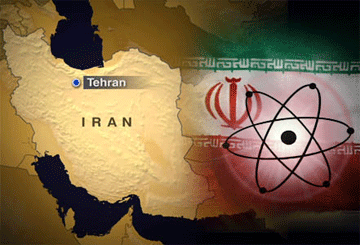
In a prior piece of research, I examined the content of, and reaction to, the historic Geneva agreement agreed between Iran and the E3+3 (Britain, France, Germany plus the usa, Russia, and China) on 24 November. But where will we go from here?
One of Israel’s greatest – if mistaken – fears concerning the agreement with Iran is this short-term deal will harden right into a long-term one, legitimating an oversized Iranian nuclear programme. The agreement to curb Iran’s nuclear program is worded carefully to preclude this: although its six-month duration is renewable, it also commits both parties ‘to conclude negotiating and commence implementing’ a last deal within a year’. But bridging the distance between the interim period and an extended-term settlement will prove exceptionally difficult.
An Endgame in Three Acts
Three phases of the agreement
For something, the endgame is clearer than it was – but still opaque. To grasp this, we must always divide the agreement into three phases.
First comes the six-month period of the interim deal itself. Next week, experts from the E3+3 will meet with Iranian counterparts to finalise the deal’s implementation, and therefore when this six-month period is to start. Iranian officials have said it’ll begin in January. This era is ‘renewable by mutual consent’, though, as I discuss below, this will surely precipitate a brand new push for brand spanking new sanctions and would clash with the commitment to succeed in a last deal within a year.
Second is the ‘comprehensive agreement’. In this period, Iran is granted ‘a mutually defined enrichment programme with practical limits and transparency measures’, and all sanctions are lifted. It will be important to notice that this isn’t, technically, a last status since it is to last only ‘for a period to be agreed upon’. This can be a concession from Iran, which desired to fix precisely how long it’d be bound by these limits. Jofi Joseph, until recently the NSC’s top Iran official and participant in talks with Iran, has suggested that Western powers might push for something ‘on the order of twenty or maybe thirty years’, partly at the basis that Iran could be more likely to have evolved in a more positive political direction over any such long period. Other analysts from E3+3 member states have suggested more modest periods of only some years. But what’s clear is that while the Geneva agreement calls this the ‘final step’, it’s actually more like parole.
This defined period could also be defined temporally, nevertheless it can even likely be associated with a so-called ‘broader conclusion’ from the IAEA that no military nuclear activities are continuing within Iran. But once the sort of conditions are met and this era concludes, the Geneva agreement is obvious that ‘the Iranian nuclear program may be treated within the same manner as that of any non-nuclear weapon state party to the NPT’. This suggests that the ‘practical limits’ of the excellent agreement will disappear. Iran would be free to change or develop its nuclear programme because it wishes, in the terms of its obligations under the Nuclear Non-Proliferation Treaty (NPT).
From interim period to comprehensive agreement
Negotiating the second one of those phases, the great agreement, is the hard part. Iran have been granted a conditional right to complement, however much the united states insists otherwise and Iran spins that it’s ‘inalienable’. It gets to complement within ‘mutually agreed parameters according to practical needs, with agreed limits on scope and level of enrichment activities, capacity, where it’s performed, and stocks of enriched uranium, for a period to be agreed upon’. That’s a creative compromise that permits either side to return away claiming victory. But those ‘parameters’ may be hotly debated.
Take ‘practical needs’, working example. Iran has before claimed it might build 10-20 nuclear power stations. Indeed, just because the Geneva agreement was being finalized, the Atomic Energy Organization of Iran (AEOI) announced that it was now considering the second one and third of those (after the Russian-built Bushehr). In a November 2013 interview with the Financial Times, Iranian President Hassan Rouhani declared, ‘how much we can expand enrichment or … how big the dimensions goes to be is dependent upon our needs for nuclear fuel’. Western powers are unlikely to simply accept either the enrichment capacity or enriched uranium stockpile commensurate with any such programme – it might involve a variety of Iran’s present enrichment – and may instead ask that Iran import its fuel, because it does for Bushehr.
How much enrichment is simply too much? Iran presently has over 19,000 centrifuges installed and over 10,000kg of uranium enriched to under 5%, with which it may ‘break out’ – produced sufficient High Enriched Uranium (HEU) for one bomb – in around two months. Western powers would need that point to elongate to a year, a minimum of. As Scott Kemp has explained in graph form, that might mean both centrifuge numbers and the enriched uranium stockpile must fall to a fragment in their present levels: one option can be 2,000 IR-1 centrifuges and 800kg of enriched uranium, roughly what Iran possessed before 2008, or even fewer centrifuges if any were to be more efficient second-generation variants.
The Arms Control Association’s Darryl Kimball has proposed ‘no greater than 3,000-4,000 centrifuges’. The Financial Times cites Western officials as claiming that Israel is pushing for ‘between 1,000 and a couple of,000’. These figures will be compatible with quite a lot of breakout times counting on how much enriched uranium Iran retained; it makes little sense to consider centrifuges alone.
For individuals who wanted Iranian enrichment to forestall altogether – including Israel, and plenty within the US Congress – this can be as unacceptably large a programme because it could be unacceptably small for Iranian hardliners. Iranian officials have frequently emphasised that their priority is at the principle of enrichment in preference to the extent and amount, and this long-held point of emphasis will constrain their rhetorical and bargaining options over the following six months. In practice, most foreign suppliers of civil nuclear technology would even be wary of signing contracts with Iran that didn’t include strict provisions on how fuel was handled – and therefore Iran’s energy needs are presently zero. Iran might conform to maintain a small fuel-manufacturing programme as an insurance plans against disruption of foreign supplies, whilst accepting that almost all of its fuel will be imported. However the psychology of loss aversion makes it harder to just accept large reversals in enrichment capability. For Iranians, the reference point for the nuclear program is 2013; for the E3+3, it would be 2002, when Iran’s enrichment programme was in its nascent stages. Bridging this gap often is the most time consuming aspect of the subsequent six months’ diplomacy.
After the excellent agreement
Once the great agreement expires – whether it lasts for years or decades – there might then be further haggling. The agreement says Iran ‘will be treated inside the same manner as that of any non-nuclear weapon state party to the NPT’. Iran is bound to argue that this suggests the removal of all limits, whereas Western powers could mention that many NPT members voluntarily accept restrictions on their programs, and that Iran should accomplish that too. Much would depend, here, on how Iran’s political system had evolved in the meanwhile period. If Iran had progressed in a more democratic direction and was on better terms with the arena and its neighbours, Western concern would diminish greatly.
In addition to the deeply-buried Fordow enrichment plant, the long-term status of Iran’s heavy water reactor at Arak may be especially problematic. Iran will claim that its decision to forego reprocessing (essential to separate plutonium from spent fuel) is a sufficient safeguard. Additionally, as Jofi Joseph notes, ‘Iran may argue that its continued operation during a CBM [interim] phase establishes a precedent for its permanent acceptance’; indeed, that Arak safeguards are even mentioned within the Geneva agreement is probably seen to imply that activation will occur sooner or later. However the West will want Iran to dismantle the entirety or – something alluded to within the Geneva agreement – convert it right into a more proliferation resistant light water reactor (something that some experts caution would mean dismantling the entire thing and building a brand new facility).
But if and when the IAEA declares with confidence that there are not any military nuclear activities occurring in Iran, imposing these limits may prove impossible. However Iran did convert Arak right into a light water reactor, then it can theoretically have the precise to construct a heavy water reactor when these limits expired. This isn’t going to sit down well with some inside the E3+3, like France, who raised a storm at the issue of Arak inside the first round of Geneva talks earlier this month, but others, like Russia, might see significant commercial opportunities in giving Iran more latitude.
Ultimately, Iran is not going to accept any agreement where it’s treated as an unequal member of the NPT. It’s because the Geneva agreement sensibly includes the promise of in depth ‘international civil nuclear cooperation’, which might incentivise Iran to restrict its nuclear programme voluntarily even after a comprehensive deal expires. To the level that a democratic Iran on better terms with the area would be viewed in less threatening terms, non-nuclear rapprochement – however distant it’s now – would also reinforce confidence in Iran after limits expired.
Domestic Politics
Iranian politics
Finally, despite the fact that the 2 sides could find common ground on a last status, either side would face domestic political obstacles to a deal. Up to now, Iranian hardliners have largely withheld their reservations, perhaps end result of the imprimatur given to the agreement by the Supreme Leader. But there may be disagreement within Iran’s parliament, the Majlis, around its authority over an enduring accord. The spokesperson for Majlis’ presiding board has argued that what’s confirmed by the Supreme Leader doesn’t should be confirmed by parliament, but others have protested this judgment and stated that Article 77 of Iran’s constitution requires parliamentary approval (all links in Persian).
At the very least, the Majlis would need to ratify Iran’s Additional Protocol, an agreement between Iran and the IAEA that enables intrusive inspections that the Khatami government signed in 2003 but later disavowed. Moreover, the interim agreement specifies that only ‘nuclear-related’ sanctions might be lifted within the comprehensive agreement: although these impose the best economic cost on Iran, many Iranian legislators won’t have realised that numerous non-nuclear sanctions, referring to terrorism and human rights, will remain in place.
American politics
On any other side, america Congress has expressed bipartisan scepticism towards the interim deal, and plenty of legislators appear to think, mistakenly, that it’s going to or will result in the dismantlement of Iran’s nuclear program. Because the agreement is arguably this administration’s most vital foreign policy achievement so far, and that new sanctions would explicitly violate its terms, President Obama is definite to veto any sanctions bill that Congress passes.
A presidential veto over a foreign policy subject will require a two-thirds veto in both the home and the Senate (for international readers: lower and upper houses of the united states legislative branch, respectively), but this has not happened since Congress’ overturning of sanctions imposed by President Reagan in 1986 over apartheid in South Africa – today, Obama will require just thirty-four senators to stay loyal.
But if a sanctions bill provides for conditional sanctions triggered after the six month interim period is up – as Senate Foreign Relations Committee chairman Robert Menendez has proposed – then a veto might meet with greater bipartisan resistance. Any attempt by the E3+3 or Iran to resume this agreement can be seen in Congress as a troubling sign that the united states and Iran were colluding to show this right into a permanent agreement, despite the US’ protestations on the contrary. As Michael Krepon notes, the lesson from Cold War arms control is that follow-on accords ought to be negotiated as quickly as possible to bypass spoilers disrupting the method.
More importantly, considering current sanctions involve not only 16 executive orders but in addition nine congressional acts, a comprehensive agreement might require that Congress pass new legislation, which in turn will require that they consent to whatever compromise Iran and the E3+3 arrive at at the list of remarkable issues discussed earlier. Presidential authority to waive sanctions can be utilized within the first stages of a comprehensive agreement, but eventually Iran would have to see irreversible steps being taken. Meanwhile, quite a few legislators are going to take issue with the undeniable fact that issues like Iran’s missile programme have gone unaddressed, and should seek to impose unrealistic conditions onto the E3+3 that transcend the terms of the roadmap agreed this weekend.
The interim agreement has put Iran farther from a nuclear weapon, demonstrated that america and Iran are able to holding sustained and effective high-level talks, untied one of the most greatest knots within the dispute – Iran’s claimed right to enhance – and established an ambitious timeline for resolving the dispute as a complete. It’s a chic diplomatic fix. But the majority of the important points are yet to be filled in, or even then the political hurdles to a last deal are daunting.
This text is customized from an earlier article at Foreign Policy’s Middle East channel.
Further Analysis: , , ,

Posted in Security Systems
The hazards and Rewards of other Approaches to Trident
Posted on July 1, 2013 at 7:44 pm
RUSI Analysis, 23 Jul 2013 By Hugh Chalmers, Research Analyst, Nuclear Analysis
The security risks posed by another ‘non-continuous’ nuclear posture, as outlined in last week’s Trident Alternatives Review, are inherently subjective. Financial (as opposed to strategic) arguments may come to dominate the choices debate – something the Liberal Democrats should have in mind.

Last Tuesday, the Coalition government announced the result of its review into alternatives to a like-for-like replacement of the UK’s ‘Trident’ nuclear system – a force of 4 nuclear-armed submarines maintaining a continual patrol. This method is because of get replaced within the mid-2020s, with an expected price ticket of between £17-23 billion (FY2013 prices), and an overall lifetime cost which can approach £97 billion.[1]
Bearing this cost in mind, the review explores quite a few alternative mechanisms and strategies for operating a nuclear force which can provide a reputable deterrent threat to potential aggressors. Overall, the review concludes that there are options to the present system that may inflict such damage, ensuring that ‘most potential adversaries around the globe can be deterred’.
For the Liberal Democrat party, that is certainly a welcome conclusion. The party rejected a ‘like-for-like’ replacement to the Trident system of their manifesto for the 2010 election, and in a speech at RUSI last Tuesday, Danny Alexander – Liberal Democrat ‘overseer’ of the review – used the occasion of the review’s launch to set up the principles of the Liberal Democrat argument for an alternate strategy to the UK’s nuclear future.
Mr Alexander acknowledged that moving far from a system of nuclear submarines armed with ballistic missiles isn’t cost-effective today, and suggested that the united kingdom should instead seek to finish permanent continuous submarine patrols, allowing the procurement of fewer replacement submarines. Of their place, the Liberal Democrats point towards four complementary postures outlined inside the review that may vary the frequency and duration of patrols (from near-continuous to no regular patrols), and the benefit where the united kingdom can move from one to a different as necessary, dependent on perceptions of the threats facing the united kingdom on the time.
Whether the united kingdom adopts this versatile way to non-continuous patrolling will ultimately depend on a parliamentary vote in 2016, when a last ‘main gate’ decision at the way forward for the UK’s nuclear force should be made. The review alone cannot make this decision. As a study commissioned by two parties with ‘very different approaches’ to this issue, it avoids making any overt cost-benefit calculations about each alternative, and opens by declaring that it’s not a press release of presidency policy. Rather, it leaves to ‘political confidence’ whether the united kingdom should operate a non-continuous nuclear posture.
Non-Continuous Nuclear Postures
Central to questions of ‘political confidence’ in a non-continuous posture is the truth that, by definition, any such policy would expose the united kingdom to periods by which its nuclear forces are inactive – susceptible to a possible pre-emptive strike and incapable of responding.
The duration and frequency of those periods of vulnerable inactivity vary between the four postures outlined within the review. A ‘focussed’ deterrent would maintain a continuing patrol for a selected amount of time in an atmosphere of heightened tension or conflict, with periods of inactivity defined only by necessary recuperation. Within the absence of such an atmosphere, the UK’s nuclear forces could move to a lower level of readiness akin to a ‘sustained’ deterrent (which might always have one submarine ‘on duty’ either patrolling or preparing to patrol), or a ‘responsive’ deterrent (by which submarines would only patrol in sporadic, irregular periods). In a purely benign environment, the force could even adopt a ‘preserved’ posture wherein submarines only deploy to hold out non-nuclear tasks and to retain the power to maneuver to at least one of the more alert postures outlined above.
The Risks
The ‘political confidence’ a celebration has in this sort of flexible technique to nuclear posture depends on a fundamental assessment of the threats the united kingdom might face sooner or later.
The Trident Alternatives Review assumes that while the united kingdom faces no heightened tension or active conflict, inactive nuclear submarines are highly unlikely to be the objective of a no-notice surprise attack. While the reviews admits that this won’t be the case during a period of hostility, there’ll be a period of escalation to hostilities wherein the united kingdom might be ready to reduce the vulnerability of its nuclear forces by moving them from a lower-level posture (resembling a ‘sustained’ or ‘responsive’ deterrent) to a stronger-level posture (comparable to a ‘focussed’ deterrent). With this in mind, confidence during this non-continuous approach rests at the following questions.
First, once the united kingdom has moved its forces to a high-readiness ‘focussed’ level, can it keep them there throughout the duration of a crisis with a small fleet of submarines? A solution to this query relies on speculation concerning the nature and length of potential future crises, and the reliability of replacement submarines – something that can not be known at the moment, or (within the latter case) estimated without access to classified information. While the review states that a 3-boat fleet ‘would risk multiple unplanned breaks in continuous covert patrolling’, it cannot clarify how frequent or protracted such breaks may be: the design of the successor submarine has not yet been finalised.
A second question follows on from this: could a break in continuous covert patrolling during a period of crisis prompt a pre-emptive strike against inactive forces? Here the term covert patrolling is essential. The UK’s nuclear force currently needs several days notice to fireplace, suggesting that it already experiences periods wherein it cannot fire. However, these periods don’t reveal the presence of a submarine, making it prone to attack. If this covert presence is suddenly and unexpectedly made overt in a crisis, a submarine may become a horny (and potentially irresistible) target of opportunity to a possible foe.
However, a temporary break in covert patrolling won’t present a foe with much of a target. Submarines patrol in vast areas, and an exposed submarine could be very hard find, or even harder to credibly strike before any unexpected faults are remedied and the submarine returns to covert patrolling. Furthermore, the hazards of an exposed submarine becoming the victim to an opportunistic strike should be tempered by the specter of a retaliatory strike by forces allied to the united kingdom. So long as the united kingdom remains allied to america, such retaliation will always weigh within the minds of a possible aggressor. While you will need to question whether the united kingdom can rely upon the specter of such retaliation to discourage an attack, additionally it is important to bear in mind that twenty-five states within NATO (besides Japan and South Korea) are happy to take action.
Nevertheless, in a period of crisis, the chance of a pre-emptive attack on inactive UK forces can’t be ruled out entirely, and the threat (or realisation) of an unexpected and unavoidable interruption to patrolling in a crisis might pressure UK decision-makers into positions or reactions they won’t normally adopt.
A third question pertains to the nature of the threats the united kingdom might face. If a threatening adversary were to emerge, how would it not react to the flexibleness inherent inside the technique to non-continuous patrolling outlined within the review? Because the review states, while a rise in patrolling might cause an adversary to back off in a crisis, it can also pressure an adversary into increasing its threats – therefore escalating (other than de-escalating) a crisis. Furthermore, the specter of such inadvertent escalation might discourage the united kingdom from bringing its forces as much as a ‘focussed’ period of constant patrolling, therefore potentially encouraging an adversary further. With no clear picture of ways a future adversary would interpret a metamorphosis in posture, this query is again open to speculation.
While prominent approaches to diplomacy suggest that an adversary would judge the UK’s intentions totally on changes to its military capabilities, a up to date study of past crises means that an adversary is prone to judge intention not on military capabilities, but on a subjective interpretation of plenty of signals, including personal relationships and ideologies.[2] a transformation within the UK’s nuclear posture may therefore not be the decisive think about the escalation or de-escalation of a crisis.
The Rewards
There are not any entirely objective answers to those questions, and the arrogance held in a non-continuous deterrent may ultimately depend more upon gut feeling than speculations about future threats. Hence, the balance between the hazards of a non-continuous posture and the financial rewards offered by a smaller fleet of submarines may play a significant role in determining the way forward for the UK’s nuclear forces as much as 2016 and beyond. The Conservative party has already drawn upon this to argue that abandoning permanent patrols will be a ‘huge gamble’ for a ‘tiny saving’.
The review provides a large amount of information that permits readers to make their very own assessment as to if the savings are significant. It estimates that a three boat option would save £4 billion in procurement and support costs over the period 2016-2060 compared to a 4 boat option, when measured at constant 2012 prices. These savings would fall almost entirely in the course of the decade from 2025 to 2035, when savings can be around £350-400 million a year. Assuming that equipment spending continues to grow at 1% in real terms, this saving could be akin to around 5-6% of the projected equipment procurement budget within the late 2020’s.
For project evaluation purposes, a further annual discount on spending of three.5% per year is generally applied, to mirror the preference for spending one day rather then now. Using this ‘Net Present Value’ approach, the complete saving from a three boat option falls to just £1.7 billion. This can be the figure it is in most cases cited by Defence Secretary Philip Hammond. The Liberal Democrats, against this, wish to use the £4 billion figure, that is more relevant for comparisons around the defence budget. Both figures are right.
Both estimates seem to assume that few savings can also be made out of adopting the three boat option before 2025, for instance from retiring a number of of the leading edge boats previous to expected, or from postponing the beginning of labor at the first new submarine. If such savings were possible, total savings can be higher than estimated inside the Report.[3]
[1] Louise Edge, Inside the Firing Line: An Investigation into the Hidden Cost of the SuperCarrier Project and Replacing Trident, Greenpeace, September 2009
[2] Keren Yarhi-Milo, ‘In the attention of the Beholder: How Leaders and Intelligence Communities Assess the Intentions of Adversaries’, International Security, Vol.38, No.1 (MIT:Harvard) pp.7-51
[3] i’m grateful to my colleague Professor Malcolm Chalmers for help on this analysis of the budgetary aspects of the Review.
Further Analysis: , , ,

Posted in Security Systems
Afghanistan’s Opium Trade: Why Britain Aren’t Kick the Drug Habit after 2014
Posted on June 29, 2013 at 11:31 am
RUSI Analysis, 12 Jul 2013 By Charlie Edwards, Senior Research Fellow/Director National Security and Resilience
As British troops depart Afghanistan, increasing production of opium and heroin within the country remains a cause for concern. There’s a clear need for the British government to continue funding counter-narcotics programmes, and work with regional partners, including Iran.

Afghanistan produces roughly 90 per cent of the world’s illicit opium.[1] In step with a up to date UNODC report, thrice as much opium was produced in Helmand in 2012 than in 2006. The 2013 Opium Risk Assessment for the southern, eastern, western and central regions of Afghanistan highlights further concerns. Poppy cultivation is predicted to expand into new areas where poppy cultivation was disrupted. This is often particularly the case in less developed areas, where farmers are planting poppy seeds within the wake of the departing coalition forces. Areas which were poppy-free for years risk resuming poppy cultivation.
The former British Prime Minister, Tony Blair, has stated that the medication trade was among the factors in his decision to intervene in Afghanistan in 2001, because it was component of the Taliban regime that ‘we should seek to destroy’. Twelve years on, the drugs trade continues to undermine the security of the country and wider region. While figures remain difficult to verify, it is estimated that the Taliban amasses a small fortune from the trade each year – with estimates of up to $150 million per annum. This money fuels the insurgency, sustains corruption within national and local government and creates the necessary conditions across Afghanistan for terrorists and insurgents to operate. The situation is now so bad in some areas of the country that American soldiers are now advised not to step foot in poppy fields or damage them in any way. Nor can they discourage poppy farmers, from growing their illicit crop, which is hardier and commands a higher price than alternatives such as wheat. Something has clearly gone badly wrong.
Fragile Gains
The truth is that the counter-narcotics campaign was always going to be a complex challenge for coalition forces. Politicians, military commanders and media commentators in the region are rightly concerned with what the increase in opium means for the drug trade and Afghanistan’s security in the future. The role of the US and its counter-narcotics strategy will also shape the UK’s response. Since 2009 the Obama Administration has scaled back on eradication efforts focusing instead on targeting Taliban-linked traffickers and alternative livelihoods efforts. Like the UK, the US has concentrated on implementing these programmes but with limited success. Should the current governance structures deteriorate post-2014 and corruption increase further, security will remain extremely fragile.
The challenge is not limited to Afghanistan. The impact of the drugs trade on Pakistan in particular is cause for concern. For the British government, Pakistan’s stability is likely to be a greater priority than Afghanistan in the future. As such, counter-narcotics work in the country – in particular supporting law enforcement activity may become a key priority for the government going forwards.
For the British government there is another equally pressing issue as the 2014 deadline draws closer: what does this all mean for UK national security? The fear, expressed by some analysts, is that 2014 will mark the point where the UK and other coalition governments quietly cut counter narcotic programmes, reduce resources and shrink their footprint in the country.
This would be a strategic error. While only 5 per cent of the total opium market in Afghanistan reaches UK shores (the rest is consumed in the region, with Iran netting eight times more opium and three times more heroin than all the other countries in the world combined), 95 per cent of the heroin in the UK comes from opium produced in Afghanistan. This adds up to approximately 20 tonnes of heroin being imported into the UK per annum.
As the drawdown in Afghanistan builds up, so the UK’s vulnerability to the drugs trade from the country and region will likely increase, though it is not necessarily inevitable. There are numerous factors that must be accounted for – such as the decline in the number of heroin users in the UK over the past decade, which now stands at 298,752 .The drugs trade comes with serious social and economic costs to the UK – some of which are hard to quantify though some organisations suggest that drug treatment programmes have prevented an estimated five million drug-related crimes a year, such as burglary, shoplifting and robbery.
Investing in the Future
Any plan to reduce the impact of the drug trade in the UK from Afghanistan will have to consider three mutually reinforcing strands of work. Support to the government of Afghanistan even if counter-narcotics becomes less of a priority for them; a renewed focus on disrupting and dismantling the supply chain which will require working with neighbouring governments; and continuing efforts at home.
In 2012, the government of Afghanistan launched the National Drug Demand Reduction Policy for the period 2012-2016. The policy addresses drug abuse prevention and the treatment and rehabilitation of drug-affected persons. It recommends the establishment of regional drug treatment centres and an increase in drug prevention and treatment capacity by up to forty per cent over the next five years.[2]
In February 2012, the Afghan government launched the National Alternative Livelihood Policy, which aims to tackle the root causes and drivers of dependency on illicit crops. It also published an Anti-Drug Trafficking Policy which concentrates on law enforcement resources on high-value drug traffickers and their organisations. The policy’s objectives include increasing the drug seizure rate from the current 0.5-1.5 per cent to a minimum of 12 per cent and increasing the precursors seizure rate to between 30 and 50 per cent within five years.
While the government of Afghanistan focuses on counter-narcotics in country – efforts will also have to continue to disrupt and dismantle the supply chain. Much of the heroin in the UK comes via a circuitous route through Baluchistan and the Makran Coast to South Africa (where it is then sent by numerous means to the UK and Europe). Heroin traffickers rely on organised crime groups to assist them in trafficking the drugs so work must focus at the supply chain as well. Key to these efforts is supporting local law enforcement and rule of law capacity across the region especially in Iran, Turkey and the Balkans. Any work must build on the UNODC programmes in Iran on illicit trafficking and border management and crime, justice and corruption.
While there are genuine concerns that the drawdown in Afghanistan could lead to an increase in both heroin to the UK as well as an increase in purity levels too, it is worth reflecting on the actual impact this is having in the UK. Some experts argue that more poppy production in Afghanistan is likely to have a direct effect on the heroin trade in Britain’s streets while others are not so sure such ‘a cut-and-dry, supply-and-demand explanation is valid.’ There are also indications that heroin use is in decline. Successful seizures – increasingly upstream, at source, has reduced the supply and had an effect on the wholesale prices for heroin. According to the Serious Organised Crime Agency, in 2009/10, 1kg heroin cost around £15-17,000 at wholesale, while in 2011 organised crime groups were trading high quality heroin for around £40,000. An aging user population has also had an impact as people are more likely to seek treatment than in the past. However, data from England and Wales show that drug misuse is responsible for 10 per cent of deaths from all causes for those aged 20-39 in 2011 and heroin and morphine accounted for most of the deaths.[3]
A Future Priority?
As British troops depart Afghanistan and the related security and intelligence infrastructure is reconfigured for the future it is likely that counter-narcotics will become a lower priority for the Afghan government and the coalition community. It would be a disaster if past gains were squandered by incoherent planning for the future. Continued support to Afghan institutions including the Counter Narcotics Police of Afghanistan, Task Force 333, and other interagency centres must remain a priority.
Given the complexity of this task, clear leadership within the British government is needed. There will be many competing demands for funding programmes in Afghanistan post-2014. The case for continuing counter-narcotics work must be made loud and clear. The government may not have succeeded in destroying the drugs trade as Blair may have hoped but it should seek to control its impact on the UK. As the draw down from Afghanistan continues apace the British government’s strategy for counter-narcotics in the rustic matters greater than ever before.
Notes
1. Bureau of International Narcotics and Law Enforcement Affairs
2. Report of the International Narcotics Control Board, http://incb.org/incb/en/about.html
3. World Drug Report 2013, http://www.unodc.org/doc/wdr/Chp1_A.pdf
Further Analysis: , , ,

Posted in Security Systems
China’s Air Defence Identification Zone and its role in Chinese Geo-Strategic Policy
Posted on June 29, 2013 at 9:38 am
RUSI Analysis, 4 Dec 2013
China’s sudden declaration of an Air Defence Identification Zone covering the uninhabited Senkaku islands just isn’t intended to increase Chinese airspace as portion of a place-denial/anti-access strategy. China’s real aim is instead to reinforce their quasi-legal territory claims inside the future.
By Justin Bronk for RUSI.org

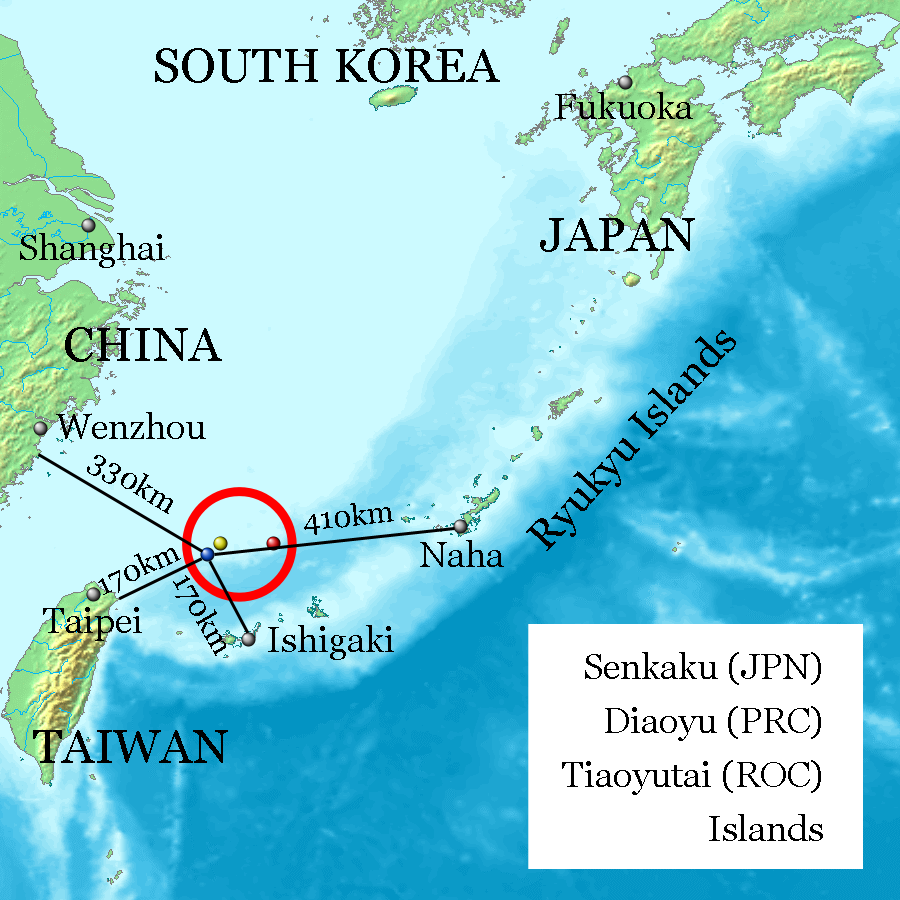 The long-running territorial dispute between China and Japan over the uninhabited Senkaku islands (referred to as Diaoyu in China) within the East China Sea recently flared up using China’s sudden declaration of an Air Defence Identification Zone (ADIZ) covering the islands and the disputed Chunxiao gas field.
Although this announcement has created a storm of protests from Japan, South Korea, Taiwan and the usa, the imposition of an ADIZ is not at all novel and in reality is a well established tool for formalising claims to national security interests in a region without trying to expand territorial borders. Japan’s own ADIZ covers the Senkaku islands, the Chunxiao gas field and over half the complete East China Sea. South Korea has an ADIZ to the North and the united states has had one in place around Guam for decades.
Therefore, although the Chinese declaration has raised the diplomatic temperature within the region, the announcement of the ADIZ need to be seen within this wider context. The ADIZ have been portrayed in Japan and masses of the Western media as an ineffective attempt at area denial which greatly increases the danger of a miscalculation which may bring about a tremendous crisis. However, Chinese actions up to now suggest that this can be a misleading view and that the ADIZ should instead be seen as an extended term option to strengthen China’s quasi-legal claims to the Senkakus, and test the Obama administration’s willingness to risk a prolonged and dear stand-off over the East China Sea.
Initial Reactions and the hazards of Accidental Escalation
Since the Chinese ADIZ was announced on 23 November 2013, USAF B-52 bombers, Japanese fighters, surveillance and AWACS aircraft, and South Korean P-3C Orion maritime patrol aircraft have all deliberately patrolled the zone without complying with the recent requirements to preserve radio contact, submit flight plans, and identify themselves to Chinese air controllers. Furthermore, Japanese airlines have refused to conform with the hot rules unless their destinations are in Chinese territory.
So far, despite Chinese Air Force spokesman Shen Jinke’s statement on 29 November that fighters have been scrambled to observe US and Japanese aircraft within the ADIZ, no actual aerial challenge was reported. The Chinese government has faced domestic criticism for not reacting to the incursions and has reacted by deploying early warning aircraft and jet fighters to patrol the disputed airspace.
This has ended in widespread media speculation in regards to the dangers of a miscalculation by all sides within the air leading to a much wider crisis, especially between China and Japan, which may attract the usa. Certainly, the ADIZ is having the effect of worsening relations in an already tense standoff that has seen multiple incursions by Chinese naval and airborne assets into declared Japanese waters round the Senkakus. However, it is very important consider that unlike other episodes within the Senkaku/Diaoyu dispute, which recently saw the Japanese government threaten to shoot down any Chinese unmanned aircraft violating its airspace and China warning that this type of move could be an act of war, the ADIZ has only been accompanied by vague warnings of ‘defensive emergency measures’ for violations. Essentially, Chinese Defence Ministry spokesman Yang Yujun said it was ‘incorrect’ to indicate China would shoot down aircraft which entered the zone without first identifying themselves.
This Chinese declaration means that the dangers of military confrontation within the ADIZ will not be as high as some inside the media have suggested. Whilst the risk of miscalculation is definitely significant, it was already an element within the Senkaku/Diaoyu dispute before the Chinese ADIZ was declared and is unlikely to greatly increase for this reason.
What Role Does the ADIZ Play in Chinese strategy whether it is Not Enforced?
The announcement that China is just not threatening to shoot down intruders raises the question of what role China actually assigns to its new ADIZ in national security policy. There isn’t a recognised legal justification for ADIZs however the extent to which they differ from no-fly zones could be seen in legal guidance at the subject that’s issued to the usa Military. Not like Chinese demands, the united states Navy Commander’s Handbook at the Law of Naval Operations states that:
‘The U . s . doesn’t recognize the precise of a coastal nation to use its ADIZ procedures to foreign aircraft not meaning to enter national airspace nor does the us apply its ADIZ procedures to foreign aircraft not desiring to enter U.S. airspace. Accordingly, U.S. military aircraft not aspiring to enter national airspace usually are not identify themselves or otherwise adjust to ADIZ procedures established by other nations, unless the us has specifically agreed to do so’.
It is very probable that the Chinese government views the ADIZ as largely symbolic, in preference to a device to noticeably expand the airspace under China’s direct control. Despite the united states Defense Secretary’s statement that the ADIZ was ‘a destabilizing try to alter the established order inside the region’, China’s actions don’t seem especially unreasonable if one considers that each one its neighbours inside the region have put ADIZs in place to hide territories to which they attach significant national interest.
Viewed on this light, Chinese claims that international protestations over the zone are hypocritical do have a hoop of truth to them. However, it also includes worth noting that the Japanese and US ADIZ’s within the region were announced well earlier than implementation and drawn up as a part of transparent processes. In contrast, China imposed its new ADIZ without prior warning or international consultation. This and the truth that China has demanded aircraft not destined for Chinese territory must comply are factors US criticism has specifically focussed on as Vice-President Joe Biden begins his Asia tour. The Chinese zone is likewise different from other ADIZ’s within the area because it covers territory that’s internationally recognised as being controlled by a foreign power (Japan).
The indisputable fact that up to now China has not taken any meaningful measures to truly enforce compliance with ADIZ requirements means that Japanese and American rhetoric painting it as a kind of area denial over disputed territories is off the mark. The Chinese military is well aware that it cannot expect to enforce the conditions of the ADIZ where it overlaps with the Japanese zone with no full scale military confrontation.
Given the Chinese Government’s sensitivity to national humiliation, it kind of feels odd for China to announce this kind of controversial measure without with the ability to enforce it, if that enforcement was required to complete the aims behind the policy. Needless to say, it’s possible that Beijing simply underestimated the united states and Japanese reaction to the ADIZ and are still debating find out how to respond. However, the shortcoming of enforcement efforts means that China’s aim seriously isn’t simple denial of access to the airspace above the Senkakus and Chunxiao gas field.
Alternate Chinese aims in establishing the ADIZ are inclined to include establishing a protracted-term quasi-legal basis for reinforcing their sovereignty claims to the Senkaku islands. The hope would presumably be that if the opposite regional powers may be able to continue to make use of the airspace without undue hindrance, protests against the ADIZ will slowly die down and in ten years time China can use the brand new ‘lines at the map’ to assert it has a protracted-term legal claim to the realm. The imposition of another framework for military/legal/diplomatic confrontation within the area will also serve to complicate and constrawithin the planning of future Japanese and US manoeuvres in the region.
The ADIZ can also be evidence of a deliberate policy of testing the U.S. commitment to its ‘Pacific pivot’ strategy within the face of continued problems for the Obama administration and American military exhaustion from the Afghanistan and Iraq campaigns. The immediate deployment of B-52s to fly in the course of the new ADIZ represents greater than a signal of refusal to recognize the zone at the portion of the united states.
In this light, it’s a signal to China that the Pentagon and the Obama administration are willing to risk a prolonged, tense and costly stand-off within the East China Sea, and completely comprehend the aptitude geo-strategic implications of China’s increasing assertiveness within the Pacific. It also suggests an apprehension in Washington that if this ADIZ isn’t met with a robust and immediate response, Beijing may repeat the strategy inside the South China Sea and elsewhere as component to its approach to force america and Japan far from the Chinese mainland.
Justin Bronk will also be contacted at j.bronk@hotmail.co.uk
Further Analysis: , , , , ,

Posted in Security Systems
Abu Qatada Leaves the uk
Posted on June 27, 2013 at 3:15 pm
RUSI Analysis, 9 Jul 2013 By Raffaello Pantucci, Senior Research Fellow
Abu Qatada symbolised an era of British jihadism that trusted radical preachers to motivate a generation of terrorists. Alongside a general degradation of Al-Qa’ida’s capacity to launch large-scale plots, Qatada’s departure marks an end of an era that peaked in the course of the 7 July 2005 attacks on London.
 The departure of Abu Qatada from British soil at the eighth anniversary of the 7 July bombings in London marks something of a marker for a period of British jihadism. From a coordinated threat directed by Al-Qa’ida that drew on a community of young British Muslims fostered by radical preachers resulting in plots just like the 7/7 attack, the menace has now evolved. Expressions inside the kind of attempted attacks or thwarted plots continue to look, but gone is both the straightforward and public coordination at home epitomised by the unconventional preacher community within the UK, and gone is ability of Al-Qaida core in Waziristan especially to govern large scale plots through this actual network to strike on British soil.
Radical Preachers
Abu Qatada was the last of 4 prominent preachers within the Uk around whom young radicals from all over the world gathered and who formed the nub of what was publicly derided as ‘Londonistan.’ A period within the 1990s when Britain became the house faraway from home for plenty of preachers and activists from around the Muslim world agitating for change, both violent and non-violent, of their home countries. A lot of these individuals presented (and continue to provide) no specific threat to the united kingdom, and are focused a great deal on events abroad.
Abu Qatada’s role within this community was a captivating one. Largely focused abroad, he nevertheless had authority over this sub-community within the UK. Particularly, he was reported to have told security services that he could ‘wield powerful, spiritual influence over the Algerian community in London.’ He also acted as a teacher figure to younger men Abu Hamza and Abdullah el-Faisal, either one of whom were characterised as his students at one time or another. He seems to have had a less direct relationship with Omar Bakri Mohammed, the fourth of the novel preachers, though it sort of feels clear the boys moved in similar circles in London. Abu Qatada’s credentials as a scholar and his links to 1 the fathers of contemporary Salafism, Muhammad Nasiruddin al-Albani set him aside from the opposite three who lacked such credentials. Unlike the opposite three, his impact seems to were more ideological, while the others fostered networks and communities from which a lot of terrorist plots emerged.
Al Qa’ida Orchestration
The most successful of those plots was 7/7 bombings finished by four men, a minimum of two of whom were trained by Al-Qa’ida in Waziristan. This plot, like lots of others that were disrupted before and because, involved Britons who have been radicalised partially under the tutelage of the unconventional preacher community, managed to determine connections with Al Qa’ida core and were directed to hold out attacks inside the West. Numerous other plots were disrupted from this network, including the August 2006 plot codenamed ‘Overt’ that aimed to bring down somewhere inside the region of eight flights on transatlantic routes with a possible casualty count higher than the 11 September 2001 attacks.
These plots drew their footsoldiers from the unconventional communities that the united kingdom-based preachers fostered. Recruiters for Al-Qa’ida or other extremists used this space to search out funding and followers. Going abroad, all these men were initially trying to fight and die on foreign battlefields. However, once there, some were re-directed back to conduct attacks at home as Al-Qa’ida realised their potential as a community that may penetrate deep into Western society. Key individuals like British national Rashid Rauf became the connective tissue providing a link between the senior echelons of Al-Qa’ida and the British recruits, helping them get around Waziristan after which providing managerial control over operations.
Over time, however, this connection has come under increasing scrutiny as Western intelligence services realised its magnitude and increasingly became ready to intercept its communications, penetrate its structures and take away key players from the sector. This ended in a gentle degradation of the network, though there’s evidence that the community of people wanting to travel to and fro to hunt training continues to exist.
Most recently this connection was seen in a case in Birmingham wherein multiple Britons travelled to Pakistan’s lawless provinces, trained alongside groups on the point of Al-Qa’ida before receiving loose direction to come home to hold out an incident of a few sort. It is a world aside from the Operation Overt cell from 2006 where multiple elements were in repeated contact with masterminds back in Pakistan who had provided specific training and targeting and helped them along the trajectory of the plot. By 2011, the extent of orchestration from afar was much harder to spot with Irfan Naseer – the plot leader of the Birmingham cell – giving little indication of being in regular touch with someone abroad. In a comment overheard by a safety listening device he said that his guidance was more rudimentary than that: ‘they said yeah, the information they gave us, they need that to spread to Europe.’ There has been little evidence offered in the course of the case (or any of the alternative cases associated with the core cell around IrfanNaseer) that anything was being orchestrated from afar. As was commented on the time, the approach appeared to be ‘fire and forget.’
Threat Shifting Overseas
But as groups in Pakistan particularly come under increasing pressure and lose their reach back to the united kingdom, the threat elsewhere abroad have been growing, and the prospective remains for foreign networks to apply the continued flow of British fighters to places like Syria to launch attacks back home. Currently, groups leading the fight in Syria have demonstrated no real interest in launching a terrorist attack within the UK (or anywhere else specifically for that matter – their interest seems involved in toppling Bashar al Assad’s regime), however it is an open question how it will develop at some point.
Beyond foreign battlefields, the net has helped spread radical ideas and made them more accessible. Lone actor terrorism is a singular phenomenon that has shown a capability to precise itself in a random and violent manner. And actions by extremist Islamist groups in Europe have ended in a counter-reaction by extremists at the other end of the spectrum. Now we have evolved, though not entirely passed, from a time when people sought out the community of radical preachers reminiscent of Abu Qatada, and from them were recruited by groups to head and fight abroad.
This evolution has turn up for several reasons. Primary amongst these was the removal of the unconventional preachers (Abu Hamza through jail after which deportation to the usa, Abdulla el Faisal through jail after which deportation to Jamaica, and Omar Bakri Mohammed through a self-imposed exile) and the removal of the open space within which they can operate. Abu Qatada’s departure from Britain for Jordan’s courts marks the realization of a protracted process by successive British governments that sought to expel these figures from the united kingdom. New charismatic leaders and preachers have since emerged, but current legislation signifies that they’re much more circumspect of their comments and openness in actively pushing people to head and fight abroad. Everyone is still drawing ideas from this ideological pool and a few are electing to head and fight abroad, however the direct linkages are actually much more discreet.
The other side to this coin is located in Pakistan where Al-Qa’ida’s ability to direct plots and plotters was substantially degraded. The pressure of drone strikes and a growing western intelligence footprint signifies that key figures like Rauf and diverse other Al-Qa’ida figures had been taken off the battlefield. People that are left are having to supply guidance and coaching in way more constrained environment, and once people have left the camps they’re largely being left to easily get on with trying to perform attacks. The age of enormous-scale orchestrated plots from Pakistan seems to have passed.
Additionally, the emergence of Al-Qa’ida affiliates and battlefields of competing interest has given individuals lots of different locations where they are able to seek to locate the journey and thrill of jihad or play their role in fighting to guard the ‘ummah.’ How these different battlefields will impact the threat picture within the UK is a developing story, but for the time being they don’t pose the identical variety of threat that Al-Qa’ida’s grand plans directed from Pakistan did.
Coming exactly eight years after Al-Qa’ida’s last successful attack at the west, Abu Qatada’s deportation marks the top of an era in British counter-terrorism. But as one era seems to return to an in depth, a brand new one could be being forged on foreign battlefields and the net marking an evolution of an issue many inside the UK may consider removed with Abu Qatada’s departure.
Further Analysis: , , , , ,

Posted in Security Systems
The Iran Agreement in Geneva: a Limited but Valuable Breakthrough
Posted on June 27, 2013 at 9:43 am
RUSI Analysis, 25 Nov 2013 By Shashank Joshi, Research Fellow
The Geneva Agreement is an artistic, astute piece of diplomacy that puts Iran farther from nuclear weapons at within your budget. However the road to a last settlement is long and rocky.
![Javed Zarif Cathy Action Iran Nuclear deal November 24 2013 [European Union photo]](http://www.securityit.co.uk/images/2013/11/the-iran-agreement-in-geneva-a-limited-but-valuable-breakthrough_b-aon_0.jpg)
(L to R) British Foreign Secretary William Hague, German Foreign Minister Guido Westerwelle, EU foreign policy chief Catherine Ashton, Iranian Foreign Minister Mohammad Javad Zarif, Chinese Foreign Minister Wang Yi, US Secretary of State John Kerry, 24 November 2013 (EU photo)
After a decade of on-off nuclear diplomacy and just over one hundred days of the presidency of Iran’s Hassan Rouhani, a deal have been done between Iran and the E3+3 (the united kingdom, France, Germany plus the usa, Russia, and China; in brief, the Six) in Geneva. Although the deal appears to have come rapidly, it’s clear that the groundwork was laid by a US-Iran backchannel going back to at the very least Rouhani’s inauguration in August, and maybe further.
The deal itself is a modest achievement that doesn’t completely freeze Iran’s nuclear programme, defers the various most challenging issues to subsequent diplomacy to occur over the following six months, and depends upon artful language to bridge differences over the most important point of contention, Iran’s claimed ‘right to enrich’ uranium by itself soil. But it surely is an astute and creative piece of diplomacy, putting Iran objectively and verifiably further clear of any nuclear weapon, imposing curbs that transcend those who were anticipated by most observers, and the entire while leaving essentially the mostsome of the most punitive sanctions entirely in place.
The Geneva Agreement
The deal (whose reported text is on the market here) has about a important aspects worth determining.
All but a freeze
First, it freezes crucial parts of Iran’s nuclear programme, while rolling back those elements which have been doing most to shorten Iran’s breakout time (the time it will take to supply fissile material for a single nuclear weapon).
Enrichment of uranium to twenty per cent, nine-tenths of ways to weapons-grade, is frozen (including by dismantling ‘technical connections’ between cascades) and stockpiles of uranium enriched to that higher level are to be converted into reactor fuel or diluted to lower levels.
Iran will continue enrichment as much as 5 per cent, but, importantly, has agreed that its stockpile of this lower enriched uranium can not grow over the six month period of the deal: it is going to convert the excess into oxide form, which makes it less readily usable for weapons use. Iran would possibly not install additional centrifuges, must leave a big proportion of installed centrifuges inactive, and can not even manufacture new centrifuges rather then to interchange damaged ones. That is something it’s to be verified through ‘IAEA access to centrifuge assembly facilities’ and ‘centrifuge rotor component production and storage facilities’, measures that go way past Iran’s formal obligations to the Agency.
Iran’s heavy water reactor at Arak was never going to head operational in the course of the period of this interim deal anyway, however the agreement forbids Iran from transferring fuel or heavy water to the location – from testing or producing fuel, or installing ‘remaining components’ – easing the understandable concerns over how Iran may have used the deal to make progress towards activation of the reactor.
The implications of this are threefold: first, Iran’s breakout time has nearly doubled (from ‘no less than 1-1.6 months to at least 1.9-2.2 months’, consistent with ISIS’ David Albright); second, even the deal’s collapse will leave the West in a closer position than the pre-deal established order; third, the deal guards against Iran ‘buying time’ for 6 months after which, on the end of the negotiating period, installing enrichment capacity that it had built up and held in reserve. This increase in breakout time is very important, and it will be interpreted along side further provisions for ‘enhanced monitoring’ of Iran’s programme and daily access for inspectors (more than today). These upgraded monitoring rights are only a start – as portion of a last deal, Iran must ratify an extra Protocol, which supplies the IAEA wider powers – nonetheless it is a vital element, and one who, as Jeffrey Lewis explains, also modestly decreases the chance that Iran could conceal any secret nuclear facilities besides its declared, safeguarded ones.
In sum: not just wouldn’t it take Iran longer to provide the fissile material for a nuclear weapon, but its likelihood of having caught has also increased. The potential for undetected or unstoppable breakout has therefore diminished greatly. Counting on how the IAEA employed its new powers, the united states and Israel would have around two months after detecting any Iranian attempt at breakout to reply, greater than sufficient time for whatever response they deemed appropriate, including an army one (obviously, for those that believe that the united states would never use force against Iran, breakout times are irrelevant). Had a deal not been done, Iran’s breakout time would have shrunk over this same period to three weeks, long before sanctions compelled it to dismantle its programme.
Sanctions Relief
Second, the deal comes cheaply. Iran is being granted not up to $7 billion of sanctions relief interested by releasing frozen Iranian funds and relief on gold, petrochemical, and automobile sector sanctions. It is a small fraction of the fee being imposed monthly by the punishing oil and banking sanctions that stay firmly in place, including all EU-mandated sanctions. The deal also permits ‘Iran’s current customers to buy their current average amounts of crude oil’, which removes the specter of further export cuts and protects Iranian revenue. But Iran will still be forfeiting over thrice as much in foregone oil revenue because it will gain in relief.
There isn’t any logical explanation why these measures should subsequently weaken the remainder sanctions over the years, since the costs of noncompliance remain as high as ever. There isn’t any sanctions slippery slope. Moreover, if Iran is unwilling to comply with the further curbs and transparency measures of a last deal, new sanctions could greater than offset any gain it made within the six-month interim period.
Compromise on enrichment
Third, the agreement is phenomenally carefully balanced at the issue of whether Iran is to be granted a ‘right to enrich’, something that Iranian officials had made a deal-breaker. US Secretary of State John Kerry insisted after the deal that ‘we don’t recognise a right to enrich’, whereas his Iranian counterpart, Mohammad Javad Zarif, declared the alternative. This disagreement is a function of the language employed within the text:
This comprehensive solution would involve a mutually defined enrichment program with practical limits and transparency measures to make certain the peaceful nature of this system. This comprehensive solution would constitute an integrated whole where nothing is agreed until everything is agreed.
“The language on this agreement is an intelligent compromise”
|
Various UN Security Council resolutions have called on Iran to halt enrichment activity, and plenty of have taken the view that Iran should therefore only be granted sanctions relief upon perfect compliance – the so-called ‘zero enrichment’ position. P5+1 officials recognised that this was unrealistic, given the domestic prominence of the difficulty within Iran, but they were wary of agreeing that Iran had what it called an ‘inalienable’ right to enrichment, not least because this can set troubling precedents for civil nuclear cooperation and other cases of potential nuclear proliferation.
The language during this agreement is an intelligent compromise. America can argue that a ‘mutually defined’ programme is one who exists by consent, not by right, and that no such precedent is being sent; Iran can argue that any form of enrichment activity presupposes a right to enrichment, and that its right have been implicit recognised.
Moreover, the usa can claim that Iranian enrichment is just sanctioned under heavy curbs – without which the ‘integrated whole’ is incomplete and no enrichment programme could be ‘defined’ i.e., granted. Iran nonetheless will point to the clause specifying that ‘following successful implementation of the ultimate step of the great solution for its full duration, the Iranian nuclear program can be treated within the same manner as that of any non-nuclear weapon state party to the NPT’, suggesting that each one limits on enrichment capacity and suchlike will disappear if and when Iran can demonstrate its alleged nuclear weapons work not continues. Here is prone to become some extent of greater contention in final status discussion.
Loopholes
It is understandable that every side will interpret the agreement to fit its own interests, particularly when the problem has domestic political resonance. It was crucial for Iran’s negotiating team that they had been seen to successfully defend Iran’s nuclear rights, not least since the Supreme Leader had emphasised this issue. But this matter can become a source of anxiety if each side is seen to be exploiting loopholes.
When america concluded a handle North Korea last year, it assumed that missile tests were banned. But Pyongyang then conducted a satellite launch, which amounts to an identical thing; even though it were verbally agreed that this will be forbidden, it was never formalised. The diplomacy in Geneva was protracted and painstaking precisely to tie such loopholes up, but in an agreement of such complexity, handling highly complex nuclear issues, more points of friction may emerge through the years. Critics will soon complain that Iran’s missile programme, which was bound up with its alleged pre-2003 weapons programme, has gone unaddressed.
The agreement does specify that ‘a Joint Commission of E3/EU+3 [the Six powers] and Iran may be established to observe the implementation of the near-term measures and address issues that will arise’, however the key test of this commission could be its ability to solve any disputes before they rise, as they might quickly, to the political level. It will become more important than ever that the international community holds Iran to those commitments, on pain of further sanctions, but in addition that the united states upholds its own promises, particularly those concerning its own pause inside the imposition of recent sanctions.
Final status