
China’s Air Defence Identification Zone and its role in Chinese Geo-Strategic Policy
Posted on June 29, 2013 at 9:38 am
RUSI Analysis, 4 Dec 2013
China’s sudden declaration of an Air Defence Identification Zone covering the uninhabited Senkaku islands just isn’t intended to increase Chinese airspace as portion of a place-denial/anti-access strategy. China’s real aim is instead to reinforce their quasi-legal territory claims inside the future.
By Justin Bronk for RUSI.org

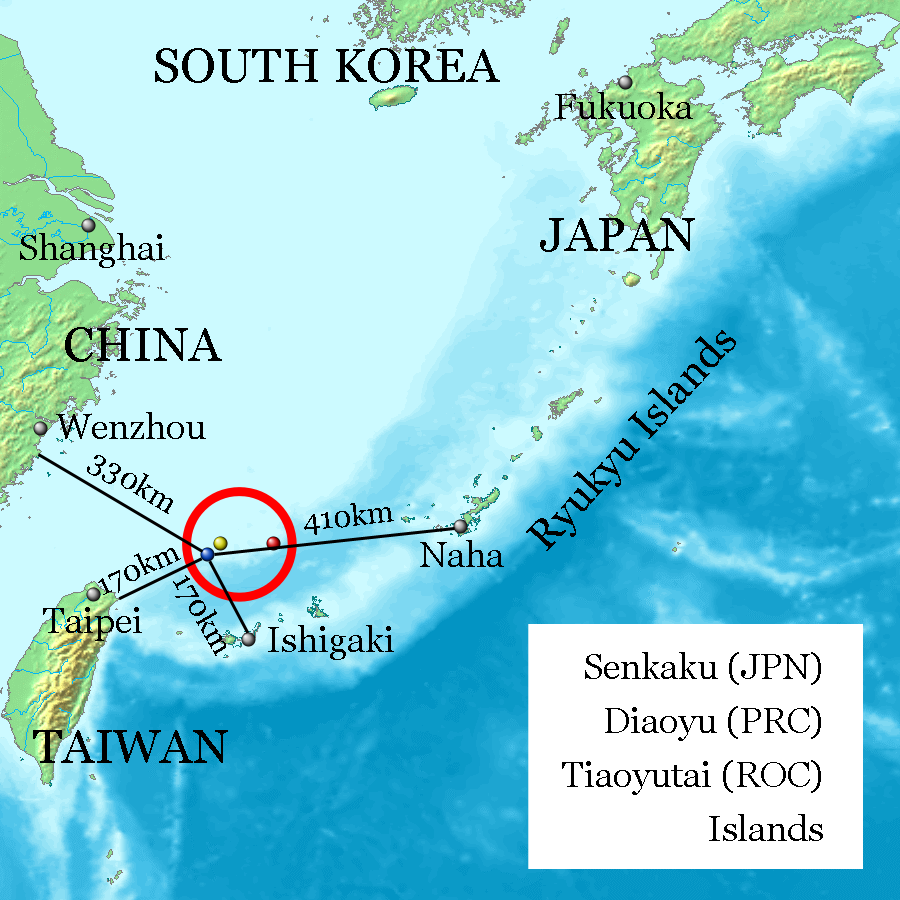 The long-running territorial dispute between China and Japan over the uninhabited Senkaku islands (referred to as Diaoyu in China) within the East China Sea recently flared up using China’s sudden declaration of an Air Defence Identification Zone (ADIZ) covering the islands and the disputed Chunxiao gas field.
Although this announcement has created a storm of protests from Japan, South Korea, Taiwan and the usa, the imposition of an ADIZ is not at all novel and in reality is a well established tool for formalising claims to national security interests in a region without trying to expand territorial borders. Japan’s own ADIZ covers the Senkaku islands, the Chunxiao gas field and over half the complete East China Sea. South Korea has an ADIZ to the North and the united states has had one in place around Guam for decades.
Therefore, although the Chinese declaration has raised the diplomatic temperature within the region, the announcement of the ADIZ need to be seen within this wider context. The ADIZ have been portrayed in Japan and masses of the Western media as an ineffective attempt at area denial which greatly increases the danger of a miscalculation which may bring about a tremendous crisis. However, Chinese actions up to now suggest that this can be a misleading view and that the ADIZ should instead be seen as an extended term option to strengthen China’s quasi-legal claims to the Senkakus, and test the Obama administration’s willingness to risk a prolonged and dear stand-off over the East China Sea.
Initial Reactions and the hazards of Accidental Escalation
Since the Chinese ADIZ was announced on 23 November 2013, USAF B-52 bombers, Japanese fighters, surveillance and AWACS aircraft, and South Korean P-3C Orion maritime patrol aircraft have all deliberately patrolled the zone without complying with the recent requirements to preserve radio contact, submit flight plans, and identify themselves to Chinese air controllers. Furthermore, Japanese airlines have refused to conform with the hot rules unless their destinations are in Chinese territory.
So far, despite Chinese Air Force spokesman Shen Jinke’s statement on 29 November that fighters have been scrambled to observe US and Japanese aircraft within the ADIZ, no actual aerial challenge was reported. The Chinese government has faced domestic criticism for not reacting to the incursions and has reacted by deploying early warning aircraft and jet fighters to patrol the disputed airspace.
This has ended in widespread media speculation in regards to the dangers of a miscalculation by all sides within the air leading to a much wider crisis, especially between China and Japan, which may attract the usa. Certainly, the ADIZ is having the effect of worsening relations in an already tense standoff that has seen multiple incursions by Chinese naval and airborne assets into declared Japanese waters round the Senkakus. However, it is very important consider that unlike other episodes within the Senkaku/Diaoyu dispute, which recently saw the Japanese government threaten to shoot down any Chinese unmanned aircraft violating its airspace and China warning that this type of move could be an act of war, the ADIZ has only been accompanied by vague warnings of ‘defensive emergency measures’ for violations. Essentially, Chinese Defence Ministry spokesman Yang Yujun said it was ‘incorrect’ to indicate China would shoot down aircraft which entered the zone without first identifying themselves.
This Chinese declaration means that the dangers of military confrontation within the ADIZ will not be as high as some inside the media have suggested. Whilst the risk of miscalculation is definitely significant, it was already an element within the Senkaku/Diaoyu dispute before the Chinese ADIZ was declared and is unlikely to greatly increase for this reason.
What Role Does the ADIZ Play in Chinese strategy whether it is Not Enforced?
The announcement that China is just not threatening to shoot down intruders raises the question of what role China actually assigns to its new ADIZ in national security policy. There isn’t a recognised legal justification for ADIZs however the extent to which they differ from no-fly zones could be seen in legal guidance at the subject that’s issued to the usa Military. Not like Chinese demands, the united states Navy Commander’s Handbook at the Law of Naval Operations states that:
‘The U . s . doesn’t recognize the precise of a coastal nation to use its ADIZ procedures to foreign aircraft not meaning to enter national airspace nor does the us apply its ADIZ procedures to foreign aircraft not desiring to enter U.S. airspace. Accordingly, U.S. military aircraft not aspiring to enter national airspace usually are not identify themselves or otherwise adjust to ADIZ procedures established by other nations, unless the us has specifically agreed to do so’.
It is very probable that the Chinese government views the ADIZ as largely symbolic, in preference to a device to noticeably expand the airspace under China’s direct control. Despite the united states Defense Secretary’s statement that the ADIZ was ‘a destabilizing try to alter the established order inside the region’, China’s actions don’t seem especially unreasonable if one considers that each one its neighbours inside the region have put ADIZs in place to hide territories to which they attach significant national interest.
Viewed on this light, Chinese claims that international protestations over the zone are hypocritical do have a hoop of truth to them. However, it also includes worth noting that the Japanese and US ADIZ’s within the region were announced well earlier than implementation and drawn up as a part of transparent processes. In contrast, China imposed its new ADIZ without prior warning or international consultation. This and the truth that China has demanded aircraft not destined for Chinese territory must comply are factors US criticism has specifically focussed on as Vice-President Joe Biden begins his Asia tour. The Chinese zone is likewise different from other ADIZ’s within the area because it covers territory that’s internationally recognised as being controlled by a foreign power (Japan).
The indisputable fact that up to now China has not taken any meaningful measures to truly enforce compliance with ADIZ requirements means that Japanese and American rhetoric painting it as a kind of area denial over disputed territories is off the mark. The Chinese military is well aware that it cannot expect to enforce the conditions of the ADIZ where it overlaps with the Japanese zone with no full scale military confrontation.
Given the Chinese Government’s sensitivity to national humiliation, it kind of feels odd for China to announce this kind of controversial measure without with the ability to enforce it, if that enforcement was required to complete the aims behind the policy. Needless to say, it’s possible that Beijing simply underestimated the united states and Japanese reaction to the ADIZ and are still debating find out how to respond. However, the shortcoming of enforcement efforts means that China’s aim seriously isn’t simple denial of access to the airspace above the Senkakus and Chunxiao gas field.
Alternate Chinese aims in establishing the ADIZ are inclined to include establishing a protracted-term quasi-legal basis for reinforcing their sovereignty claims to the Senkaku islands. The hope would presumably be that if the opposite regional powers may be able to continue to make use of the airspace without undue hindrance, protests against the ADIZ will slowly die down and in ten years time China can use the brand new ‘lines at the map’ to assert it has a protracted-term legal claim to the realm. The imposition of another framework for military/legal/diplomatic confrontation within the area will also serve to complicate and constrawithin the planning of future Japanese and US manoeuvres in the region.
The ADIZ can also be evidence of a deliberate policy of testing the U.S. commitment to its ‘Pacific pivot’ strategy within the face of continued problems for the Obama administration and American military exhaustion from the Afghanistan and Iraq campaigns. The immediate deployment of B-52s to fly in the course of the new ADIZ represents greater than a signal of refusal to recognize the zone at the portion of the united states.
In this light, it’s a signal to China that the Pentagon and the Obama administration are willing to risk a prolonged, tense and costly stand-off within the East China Sea, and completely comprehend the aptitude geo-strategic implications of China’s increasing assertiveness within the Pacific. It also suggests an apprehension in Washington that if this ADIZ isn’t met with a robust and immediate response, Beijing may repeat the strategy inside the South China Sea and elsewhere as component to its approach to force america and Japan far from the Chinese mainland.
Justin Bronk will also be contacted at j.bronk@hotmail.co.uk
Further Analysis: , , , , ,

Posted in Security Systems