
We Hate the EDL Greater than We like Life?
Posted on June 1, 2013 at 2:37 pm
RUSI Analysis, 9 May 2013 By Raffaello Pantucci, Senior Research Fellow
Last week, Islamist extremists were found guilty of plotting a terrorist attack on a rally of the English Defence League. The case shows how extremists from all sides are turning to violent means. It also shows how Jihadists within the Uk are that specialize in domestic targets.
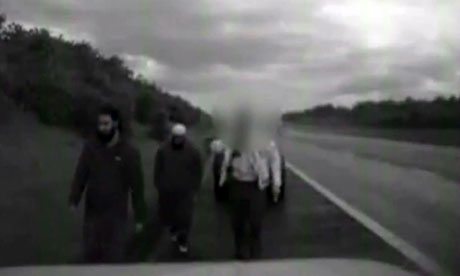
The plan was to attack an English Defence League (EDL) march in Dewsbury and probably leader Tommy Robinson using knives, machetes, shotguns and explosives. some of the figures within the plot had appeared at the periphery of different investigations: at the very least one was already on bail (having served time) for possession of terrorist material, another was a fundraiser in a separate plot to hold out an unspecified suicide bombing and another was the brother of a plotter from an identical investigation. The case highlights a whole lot of issues for British security, intelligence agencies and the police. This includes understanding the multiple strands of potential terrorist activity within the Birmingham’network of networks’; understanding the dynamic between Islamist extremists and the Far right and living with the embedded domesticization of the terrorist threat within the Uk.
The Plot
The particular plot to focus on the EDLwas one which was portion of a phenomenon of growing concern to security officials. The plotters actions appear portion of an apparent escalation that the 2 sides share within the press and at events: the crowd of Islamist extremists from Birmingham were planning to drive north and launch an attack against a planned EDL march in Dewsbury on 30 June 2012. They’d gathered knives, machetes, sawn-off shotguns, a partially constructed pipe bomb, a fireworks based improvised explosive device and had of their possession a letter addressed to Prime Minister David Cameron, the Queen and the ‘English Drunkards League.’ The boys had allegedly aborted their attack after being late for the EDL rally, returning home having done nothing. Had they been ready to perform their attack, the casualties might have been high and police were unable to rule out that the crowd were planning a suicide attack.
This is the primary plot through which a bunch of Islamist terrorists has chosen to take measures to directly target members of the EDL, an extremist group that ‘was founded inside the wake of the shocking actions of a small group of Muslim extremists who, at a homecoming parade in Luton, openly mocked the sacrifices of our service personnel with none fear of censure.’ The parade in question was in March 2009 and was conducted by a set that was praised by self-appointed preacher AnjemChoudhry – among the leading figures inside the now-banned al Muhajiroun – and involved various people who have been affiliated with the crowd in Luton. Similarly inflammatory incidents had been conducted on Remembrance Days in 2010 (through which a protester burned a symbolic poppy) and 2011 (when the protest used the headline ‘Hell for Heroes’), and a planned protest at Wootton Basset in 2010 was cancelled after much publicity.
The EDL’sresponse to this was a sequence of protest marches up and down the rustic, all of which are a magnet for varying degrees of support and a spotlight. The crowd has not been associated with any terrorist plots, though a good number of its members were arrested over the years for varied public order offences – usually involving violence at protests. Separately there have also been arrests of far right activists allegedly planning bombings of a few kind, though their group affiliation (if any) remains unclear.
The picture from a central authority perspective is a negative one. An already polarised public political conversation is taking a more violent tone. The risk of a cyclical reaction and counter-reaction between the 2 sides of an extreme equation seems increasingly tangible, with already heightened tensions between different communities now finding acts of terrorism palatable. The question becomes whether this actual event will spark a likely counter-reaction or just prove a one off.
Local Targeting, Less Command and Control
From a solely violent Islamist perspective, this plot highlights both the ongoingand embedded nature of the domestic threat, and the growing evidence of an absence of command and control from overseas. Whilst individuals during this plot were thinking about a separate cell, there’s little within the public domain to suggestthat they received instruction from Al-Qa’ida. Rather, the plot seems to was one who was concocted amongst networks based inside the Uk, loosely using publications like Inspire magazine as guides to construct devices, but targeted at domestic, almost ‘local’ grievance issues. The option of the EDL as a target is absolutely not actually that new: in a up to date case in Luton the gang mentioned the EDL on an inventory of potential targets that included the protection Service, MI5, and the united states Air Force (USAF). In a separate case, radicalised convert Richard Dart mentioned attacking a protest at Wootton Basset as a potential target while also being in possession of a recording of himself delivering a video ‘Message to the EDL’ on a ‘Muslims Against Crusades’ video. But in neither of those cases had individuals done greater than include the crowd as one in all quite a few possible targets they were fascinated by exploring in the UK.
This selection of targeting reflects a growing trend in British violent Islamist networks where they’ve got chosen targets of a truly domestic British nature instead of international. Is it the case that very like politics, all terrorism is local? In place of public transport, international targets or large shopping arenas, this group intended to focus on a domestic British political organisation. Similar efforts some time past include the attempt in September 2008 to firebomb the house of the publisher of the book The Jewel of Medina, a book that had attracted some controversy for its portrayal of the Prophet Muhammed or Roshonara Choudhry’s attempted murder of MP Stephen Timms for his vote in favour of the Iraq War after she had watched a chain of videos by Anwar al Awlaki. In either one of these cases, the ideology that was underpinning the option of targets was support for a worldwide jihadist cause, however the result was a decision of target that was more a mirrored image of local concerns that international targeting. This reflects, as a minimum partially, the truth that none of those cells had any clear connections to outside plotters who might need steered them towards more prominent targets with a global profile.
A Complex Intelligence Picture
The made from this approach is a collection of plots that demonstrate less external direction and more haphazard targeting. This complicates traditional threat assessments of targeting choices, in addition to making harder the job of identifying cells pre-emptively. Traditionally, security and intelligence services and police find cells or plotters through their communication or contacts with others: if a cell lacks any direct command and control from abroad or is a Lone Actor, then this becomes a harder proposition. This also implies that it’s harder to spot and assess individuals within a broad community of interest who’re either involved or at the periphery of a terrorist cell.
If people are all radicalising within a broader community and the targeting decisions are coming around in a more random manner – using easily accessible weapons and enthusiastic about domestic political targets – officials observing may find it difficult to differentiate that are moving towards a terrorist atrocity versus people who are simply expressing extreme political affairs. Additionally, when the targeting picture is one concerned about domestic British extremist political entities, it implies that a potentially much wider group of folk are affected: there are various folks that talk loudly about being angry concerning the EDL or other similar groups, but which might be those people who are talking with potentially terrorist intent versus those simply expressing anger and opposition? A Sheffield man was charged with threatening the EDL with an attack after he sent a threatening message through their website: a jury was unable to succeed in a conclusion in a case where the defendant claimed to have sent the message out of non-public spite with out a intent.
Finally, that’s worth noting that this cell targeting the EDL was one who was actively portion of the extremistcommunity in Birmingham that was the source of a lot of serious terrorism cases of late. Jewel Uddin, some of the key figures inside the group targeting the EDL was a fundraiser for a cell convicted recently for planning to hold out an unspecified suicide bombing within the Uk. Uddin was as a matter of fact mentioned in the course of the previous trial as a person who appeared on various wiretaps and was not less than briefly under direct intelligence surveillance:whilehe purchased knives that were subsequently discovered in a vehicle with other weapons the cell was going to take advantage of in attacking the EDL march.
Another member of the gang, Zohaib Kamran Ahmad was previously incarcerated on charges of possessing radical material, while AnzalHussain was the brother of 1 of the individuals fascinated about the former Birmingham case. Which means that in total 17 Birmingham men have pled guilty of terrorism offences in quick succession, highlighting ongoing radicalisation in the city. Locals point to the truth that families in Birmingham tried to solve a number of the issues themselves instead of alert authorities as a fantastic sign about trends in recognizing and accepting the chance of radicalisation within the city. Nevertheless, this is becoming apparent that Birmingham isa rising as a source of shock for British security authorities.
Overall, there’s a complicated domestic picture that’s matched by an equally confused map abroad where Al-Qa’ida’s increased fracturing offers numerous new regions where potential threats might brew – like parts of the Sahel, Nigeria, Syria etc. The terrorist threat within the UK could seem increasingly amateurish and domestic, nevertheless it maintains the capability to provide sudden, sharp blows. Understanding where these may come and the way they express themselves will remain a priority for the following few years.
Further Analysis: , , ,

Posted in Security Systems