Posted on June 3, 2013 at 3:01 pm
Over the last two months, the regime in North Korea has indulged in an astonishingly vitriolic outburst of rhetoric. This has occurred mainly in keeping with the growth of UN sanctions against the rustic and the resumption people-South Korean Foal Eagle military exercises at the Korean Peninsula in March.
North Korea opened this one-sided disagreement with threats to make use of its ‘lighter and smaller’ nuclear weapons to show its enemies’ strongholds right into a ‘sea in flames’. Since then, its rhetorical volleys have ranged from the overall (issuing warnings of its troops’ state of readiness for ‘all-out-war’), the categorical (reminding the usa that its air forces on Guam are ‘within the striking range’ of North Korean missiles), the indirect (warning diplomats in Pyongyang to go away for his or her own safety), or even the self-destructive (stating the country’s intention to ‘close the [Kaesong industrial] zone without mercy’).
Yet with both-month-long exercises now drawing to a detailed, the item of the North’s chagrin (be it sincere or not) has receded. And having marked the birthday of the deceased ‘Dear Leader’ Kim Il-sung on 15 April, Pyongyang may feel that it has fuelled the revolutionary fires of its people sufficiently to last through to the following Kim family anniversary. Moreover, despite the pervasive atmosphere of crisis, over the past two weeks the stream of threats from the North has subsided and not using a shot being fired.
But while the storm now seems to have passed, developments that experience emerged in its midst could yet complicate future efforts to enhance the protection situation at the Korean Peninsula. Particularly, decisions taken by North Korea and the U.S. could now put diplomatic common ground even further out of reach.
In March, for instance, Pyongyang announced that it should restart the production of plutonium for nuclear weapons, rapidly undoing one of the notable successes of multilateral diplomacy up to now. Satellite imagery means that the North has indeed begun construction work around its mothballed nuclear reactor in Yongbyon, whose cooling tower was destroyed in 2007 as a ‘striking visual’ of its commitment to disarmament.
This is concerning: consistent with Siegfried Hecker, who visited the Yongbyon complex in 2010, the North could conceivably bring this reactor online within weeks and begin adding weapons-grade plutonium to its meagre stockpiles within three to four years. If this involves pass and the North regains an open-ended nuclear warhead stockpile, Pyongyang’s next outburst could be harder to shrug off, with this nuclear acceleration becoming the backdrop against which future North Korean and US postures take shape.
Indeed, one of the vital greatest unknowns of late have been the degree to which Pyongyang’s threats are shaped by the non-public approach of the country’s new leader. By the point the late Kim Jong-il assumed power in 1994, he had grown conversant in the conduct of his country’s foreign policy through his gradual assumption of responsibility. His son, Kim Jong-un, has had no such luxury, having been thrust into the North Korean system upon his father’s death with little experience in leadership or foreign relations. Therefore, he and Western governments remain poorly acquainted, making a correct assessment of Pyongyang’s latest outbursts each of the more difficult.
The latest conflict is the primary intensive exchange between Kim Jong-un’s North Korea and the West, which include its East Asian allies. There’s now little question that Kim Jong-un will adhere to the country’s historic ‘military-first’ policy or traditional modus operandi of megaphone diplomacy. In reality, he has enhanced those approaches, uttering unusually specific and severe threats and taking selective action to illustrate national resolve.
It should be asked, therefore, whether we must always expect this level of bellicosity at any time when the usa and South Korea conduct joint military exercises at the Korean Peninsula, or a brand new UN Security Council resolution imposing sanctions is passed.
There are two possibilities during this respect. The primary is that Kim Jong-un regards this crisis as a way of testing international responses to his actions, while also gaining maximum propaganda benefit and demonstrating his capacity to steer politically and militarily. In other words, through a risky exchange together with his adversaries, Kim Jong-un can have learnt what most successfully creates fear or causes pause in foreign capitals. Indeed, selective action to take advantage of international uncertainty in regards to the North’s military capabilities, including the deployment of mobile missile launchers, is probably going to was seen as having proven useful in attracting the eye of Washington and Seoul. So, too, could have been the limited self-harm caused, as an example, by the disruption of operations on the Kaesong Industrial Zone – an industrial complex just about the border with South Korea, operated jointly by both countries and employing greater than 50,000 North Koreans.
Similarly, Kim Jong-un could have learnt which threats are most quickly dismissed as bluster, notably his recommendation that diplomats in Pyongyang evacuate. With this experience under his belt, North Korea’s new leader would possibly not necessarily see the necessity to test his adversaries within the same way next time.
The second possibility, conversely, is that Kim Jong-un, in trying to consolidate his power over an uneasy military, might have created expectations that he’s going to continue to cope with external ‘aggressors’ with a noisy voice and a company hand.
Should he continue this behaviour, however, he may face diminishing propaganda returns as adversaries become acquainted with the increased level of antagonism. And while ‘business as usual’ with North Korea may turn out to be conducted more loudly under the young Kim than under his father, there can also be an unidentified threshold beyond which Washington and Seoul will now not see the relative advantage of enduring North Korea’s taunts, however ‘standard’ they could become. This becomes a particularly salient consideration as Pyonyang’s nuclear and ballistic-missile programmes advance, adding credibility to its threats.
Longer-term efforts to minimize tensions through multilateral diplomacy will likely even be complicated by the new posturing of parties to the conflict. A more regular dialogue between these parties wouldn’t likely bring a swift end to North Korea’s nuclear programme. However it could help to diffuse, and avoid, the kind of tensions witnessed of late, if, it is, concerned nations could agree on what to speak about. It’s here that the best divide now lies.
In an try to moderate tensions with North Korea on a visit to the region in April, US Secretary of State John Kerry publicly stated Washington’s openness to nuclear talks if certain conditions were met: most crucially, that North Korea demonstrate it has ‘the will to denuclearize’. His statement, however, would not represent an incredible departure in US policy: this conditional offer has, in theory, been quietly at the table for a while.
North Korea, for its part, retaliated with its own list of conditions which might convince it that the usa ‘truly stand[s] for dialogue’. These include an apology for the new provocations, an end to UN sanctions, a withdrawal of all nuclear-capable US assets from the region, and a pledge never again to conduct military exercises at the Korean Peninsula.
Indeed, Pyongyang isn’t interested by talks aimed toward its unilateral disarmament, some degree upon which it has become increasingly clear. The National Defence Commission declared flatly in January that North Korea does not denuclearise until the arena does so – a position confirmed by the Supreme People’s Assembly in its statement that nuclear weapons are ‘the nation’s life’, thereby cementing their role in national identity and security policy.
Whilst active, the Six-Party Talks – a chain of negotiations that began in 2003 between China, america, North and South Korea, Japan and Russia, and were abandoned by North Korea in 2009 – involved three multilateral working groups. One concerned with peaceful energy co-operation, chaired by South Korea; another at the denuclearisation of the Korean Peninsula, chaired by China; and the third on broader regional peace and security, chaired by Russia.
The first of those topics is presently unappetising to most countries, especially the usa, South Korea and Japan. The second one is of little interest to Pyongyang in light of the emphasis put on nuclear weapons in its national doctrine, and as North Korea charges ahead with its nuclear development, Washington will continue to wish North Korea to comply with nuclear talks, instead of the reverse. So long as this remains the case, Pyongyang is unlikely to be tempted to the table for talks on denuclearisation.
However, Pyongyang has a robust interest in keeping the third avenue for dialogue open, within the hope that it could result in security assurances or the replacement of the armistice agreement with a peace treaty. Unsurprisingly, however, Washington rejects the potential of a peace treaty while Pyongyang has an active nuclear-weapons programme.
As a result, despite immense tensions, not one of the Six-Party Talks working-group topics currently seems palatable to any of the countries involved. Statements and actions throughout this crisis have only widened this vast gap in understanding, and that’s difficult to foresee anything within the near term that may create common ground.
Although unlikely, it’s possible, however, that developments over the arriving years will compel parties to back clear of their respective positions. Once the restarted reactor at Yongbyon becomes fully operational, as an example, the temptation for North Korea to work out this as a bargaining chip to elicit concessions in other areas will rise. Therefore, Pyongyang may remain unwilling to go into talks on ‘denuclearisation’, but will, while, grow more open to nuclear-focused talks with out a inherent or specific goal.
Similarly, because the first- and second-order effects of the North Korean issue combine with other regional security problems, the usa may find itself embroiled in an internet of tensions between North and South Korea, Japan and China. At this point, a non-nuclear-specific, multilateral dialogue on regional peace and security won’t look so undesirable to Washington.
Putting the possibility of this outcome aside, it really is nonetheless clear that, despite some echoes of past experience inside the latest tensions with North Korea, new and important decisions were taken by both Pyongyang and Washington which, if adhered to, could complicate the safety situation at the peninsula. Pyongyang may have a more diverse and steady supply of weapons-grade fissile material, while Kim Jong-un, perhaps emboldened by his country’s nuclear advancement and driven by domestic pressures for assertiveness and continuity, might lock himself into responding with equal belligerence in future. In the sort of context, common ground for dialogue, peculiarly between the U.S. and North Korea, will remain non-existent.
North Korean behaviour is usually spoken of as a cycle of escalation and de-escalation. And indeed, 2013 has already served as an invaluable reminder that even once tensions with Pyongyang recede, traces will endure, potentially adding new threads to an already daunting knot.
Andrea Berger and Hugh Chalmers
Research Fellow and Research Analyst, Nuclear Analysis, RUSI.
Posted in Security Systems
Posted on June 1, 2013 at 5:29 pm
More than four years have passed since President Obama came to office seemingly intent on finding a diplomatic strategy to the matter posed, in US and EU eyes, by Iran’s acquisition of a dual-use nuclear technology, namely that of uranium enrichment. Yet that diplomatic solution remains not in sight: while two rounds of talks this year between EU High Representative for Foreign Affairs and Security Policy Catherine Ashton (speaking for the U.S., EU, Russia and China) and Secretary of the Supreme National Security Council Saeed Jalili (representing Iran’s Supreme Leader Ayatollah Ali Khamenei) have helped both sides gain a greater understanding of every other’s positions, they’ve failed, as have previous rounds, to generate negotiating momentum. Key one of several various possible explanations for this disappointing outcome is the problem of trust.
Iran’s loss of trust within the US’s good faith has become increasingly manifest. It’s frequently voiced by Iranian diplomats, while Iran’s foreign minister addressed the problem publicly in his observations in Berlin on 4 February that ‘a loss of reciprocal confidence is the crux of the matter’, and that ‘Iran needs evidence that US offers to speak are made in good faith – that they’re authentic and sincere’.
Perhaps most significantly, Ayatollah Khamenei also subscribes to this view of the nuclear problem. As recently as 20 March he stated: ‘I am not optimistic about talks. Why? Because our past experiences show that talks for the yankee officials don’t mean for us to sit and reach a logical solution … What they mean by talks is that we sit and talk until Iran accepts their viewpoint.’
Posted in Security Systems
Posted on June 1, 2013 at 2:37 pm
RUSI Analysis, 9 May 2013 By Raffaello Pantucci, Senior Research Fellow
Last week, Islamist extremists were found guilty of plotting a terrorist attack on a rally of the English Defence League. The case shows how extremists from all sides are turning to violent means. It also shows how Jihadists within the Uk are that specialize in domestic targets.
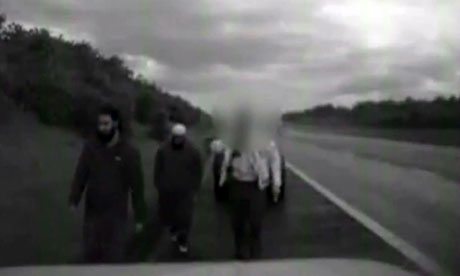
The plan was to attack an English Defence League (EDL) march in Dewsbury and probably leader Tommy Robinson using knives, machetes, shotguns and explosives. some of the figures within the plot had appeared at the periphery of different investigations: at the very least one was already on bail (having served time) for possession of terrorist material, another was a fundraiser in a separate plot to hold out an unspecified suicide bombing and another was the brother of a plotter from an identical investigation. The case highlights a whole lot of issues for British security, intelligence agencies and the police. This includes understanding the multiple strands of potential terrorist activity within the Birmingham’network of networks’; understanding the dynamic between Islamist extremists and the Far right and living with the embedded domesticization of the terrorist threat within the Uk.
The Plot
The particular plot to focus on the EDLwas one which was portion of a phenomenon of growing concern to security officials. The plotters actions appear portion of an apparent escalation that the 2 sides share within the press and at events: the crowd of Islamist extremists from Birmingham were planning to drive north and launch an attack against a planned EDL march in Dewsbury on 30 June 2012. They’d gathered knives, machetes, sawn-off shotguns, a partially constructed pipe bomb, a fireworks based improvised explosive device and had of their possession a letter addressed to Prime Minister David Cameron, the Queen and the ‘English Drunkards League.’ The boys had allegedly aborted their attack after being late for the EDL rally, returning home having done nothing. Had they been ready to perform their attack, the casualties might have been high and police were unable to rule out that the crowd were planning a suicide attack.
This is the primary plot through which a bunch of Islamist terrorists has chosen to take measures to directly target members of the EDL, an extremist group that ‘was founded inside the wake of the shocking actions of a small group of Muslim extremists who, at a homecoming parade in Luton, openly mocked the sacrifices of our service personnel with none fear of censure.’ The parade in question was in March 2009 and was conducted by a set that was praised by self-appointed preacher AnjemChoudhry – among the leading figures inside the now-banned al Muhajiroun – and involved various people who have been affiliated with the crowd in Luton. Similarly inflammatory incidents had been conducted on Remembrance Days in 2010 (through which a protester burned a symbolic poppy) and 2011 (when the protest used the headline ‘Hell for Heroes’), and a planned protest at Wootton Basset in 2010 was cancelled after much publicity.
The EDL’sresponse to this was a sequence of protest marches up and down the rustic, all of which are a magnet for varying degrees of support and a spotlight. The crowd has not been associated with any terrorist plots, though a good number of its members were arrested over the years for varied public order offences – usually involving violence at protests. Separately there have also been arrests of far right activists allegedly planning bombings of a few kind, though their group affiliation (if any) remains unclear.
The picture from a central authority perspective is a negative one. An already polarised public political conversation is taking a more violent tone. The risk of a cyclical reaction and counter-reaction between the 2 sides of an extreme equation seems increasingly tangible, with already heightened tensions between different communities now finding acts of terrorism palatable. The question becomes whether this actual event will spark a likely counter-reaction or just prove a one off.
Local Targeting, Less Command and Control
From a solely violent Islamist perspective, this plot highlights both the ongoingand embedded nature of the domestic threat, and the growing evidence of an absence of command and control from overseas. Whilst individuals during this plot were thinking about a separate cell, there’s little within the public domain to suggestthat they received instruction from Al-Qa’ida. Rather, the plot seems to was one who was concocted amongst networks based inside the Uk, loosely using publications like Inspire magazine as guides to construct devices, but targeted at domestic, almost ‘local’ grievance issues. The option of the EDL as a target is absolutely not actually that new: in a up to date case in Luton the gang mentioned the EDL on an inventory of potential targets that included the protection Service, MI5, and the united states Air Force (USAF). In a separate case, radicalised convert Richard Dart mentioned attacking a protest at Wootton Basset as a potential target while also being in possession of a recording of himself delivering a video ‘Message to the EDL’ on a ‘Muslims Against Crusades’ video. But in neither of those cases had individuals done greater than include the crowd as one in all quite a few possible targets they were fascinated by exploring in the UK.
This selection of targeting reflects a growing trend in British violent Islamist networks where they’ve got chosen targets of a truly domestic British nature instead of international. Is it the case that very like politics, all terrorism is local? In place of public transport, international targets or large shopping arenas, this group intended to focus on a domestic British political organisation. Similar efforts some time past include the attempt in September 2008 to firebomb the house of the publisher of the book The Jewel of Medina, a book that had attracted some controversy for its portrayal of the Prophet Muhammed or Roshonara Choudhry’s attempted murder of MP Stephen Timms for his vote in favour of the Iraq War after she had watched a chain of videos by Anwar al Awlaki. In either one of these cases, the ideology that was underpinning the option of targets was support for a worldwide jihadist cause, however the result was a decision of target that was more a mirrored image of local concerns that international targeting. This reflects, as a minimum partially, the truth that none of those cells had any clear connections to outside plotters who might need steered them towards more prominent targets with a global profile.
A Complex Intelligence Picture
The made from this approach is a collection of plots that demonstrate less external direction and more haphazard targeting. This complicates traditional threat assessments of targeting choices, in addition to making harder the job of identifying cells pre-emptively. Traditionally, security and intelligence services and police find cells or plotters through their communication or contacts with others: if a cell lacks any direct command and control from abroad or is a Lone Actor, then this becomes a harder proposition. This also implies that it’s harder to spot and assess individuals within a broad community of interest who’re either involved or at the periphery of a terrorist cell.
If people are all radicalising within a broader community and the targeting decisions are coming around in a more random manner – using easily accessible weapons and enthusiastic about domestic political targets – officials observing may find it difficult to differentiate that are moving towards a terrorist atrocity versus people who are simply expressing extreme political affairs. Additionally, when the targeting picture is one concerned about domestic British extremist political entities, it implies that a potentially much wider group of folk are affected: there are various folks that talk loudly about being angry concerning the EDL or other similar groups, but which might be those people who are talking with potentially terrorist intent versus those simply expressing anger and opposition? A Sheffield man was charged with threatening the EDL with an attack after he sent a threatening message through their website: a jury was unable to succeed in a conclusion in a case where the defendant claimed to have sent the message out of non-public spite with out a intent.
Finally, that’s worth noting that this cell targeting the EDL was one who was actively portion of the extremistcommunity in Birmingham that was the source of a lot of serious terrorism cases of late. Jewel Uddin, some of the key figures inside the group targeting the EDL was a fundraiser for a cell convicted recently for planning to hold out an unspecified suicide bombing within the Uk. Uddin was as a matter of fact mentioned in the course of the previous trial as a person who appeared on various wiretaps and was not less than briefly under direct intelligence surveillance:whilehe purchased knives that were subsequently discovered in a vehicle with other weapons the cell was going to take advantage of in attacking the EDL march.
Another member of the gang, Zohaib Kamran Ahmad was previously incarcerated on charges of possessing radical material, while AnzalHussain was the brother of 1 of the individuals fascinated about the former Birmingham case. Which means that in total 17 Birmingham men have pled guilty of terrorism offences in quick succession, highlighting ongoing radicalisation in the city. Locals point to the truth that families in Birmingham tried to solve a number of the issues themselves instead of alert authorities as a fantastic sign about trends in recognizing and accepting the chance of radicalisation within the city. Nevertheless, this is becoming apparent that Birmingham isa rising as a source of shock for British security authorities.
Overall, there’s a complicated domestic picture that’s matched by an equally confused map abroad where Al-Qa’ida’s increased fracturing offers numerous new regions where potential threats might brew – like parts of the Sahel, Nigeria, Syria etc. The terrorist threat within the UK could seem increasingly amateurish and domestic, nevertheless it maintains the capability to provide sudden, sharp blows. Understanding where these may come and the way they express themselves will remain a priority for the following few years.
Further Analysis: , , ,

Posted in Security Systems
Posted on May 30, 2013 at 6:54 pm
The decision by Turkey and Japan to restart exclusive bilateral negotiations for a $20-billion tender for the development of a second nuclear power plant on the Sinop site was announced in early May, as a part of the government’s plans to lessen its dependence on imported energy. The agreement aims to strengthen Turkey’s already ambitious nuclear efforts, consisting of an agreement with a Russian consortium for the development of 4 VVER-1200 reactors near town of Mersin on Turkey’s Mediterranean coast. With the 1st of the four VVER reactors expected to be operational your time before 2023, this decision marks further progress along these lines, and while this has raised some concerns within the context of ongoing tension with Iran over its nuclear programme, Turkey’s current trajectory doesn’t suggest a rustic keen to procure a reactor with a view to gain a nuclear-weapons capability. Instead, Ankara’s actions seem like in keeping with it historical method of nuclear energy.
Turkey’s historic energy poverty has fuelled the country’s ambitions to set up nuclear power plants for with regards to five decades. Despite the hampering of its efforts over this era by political instability and unrealistic tender demands, Ankara has continued to advocate for the construction of nuclear energy, arguing that the procurement of reactors is significant to national economic growth.
Posted in Security Systems
Posted on May 29, 2013 at 4:57 pm
From film and eye-witness footage, it’s quite clear that the perpetrators of the Woolwich attack were motivated for terrorist ends. The craze is now quite apparent, as is their intended objective of sowing societal discord.
 Yesterday afternoon two individuals done a brutal attack on an off-duty British soldier. They then calmly announced what that they had done to the encompassing crowd. This has sparked a reaction with the English Defence League (EDL), while separately people are supposed to have attacked mosques. The assault looks just like the culmination of trends which have become increasingly visible in violent Islamist terrorism of late.
This isn’t the first time that such attacks or targeting has taken place. In May 2010, Roshonara Choudhry took a knife she had bought at Tesco and stabbed Stephen Timms MP. When asked about her motivation, she pointed to the truth that he had voted for the Iraq War. By her own admission, she had devised the punishment having watched videos by Anwar al Awlaki online. Targeting off-duty soldiers may be not new: within a British context there’s the case of Parviz Khan who was plotting to kidnap and behead a British soldier in Birmingham .He was disrupted before he could successfully perform his attack, but Mohammed Merah a 23-year-old French-Algerian was more successful. Having identified individuals through online activity at home in Toulouse and Montauban, he shot and killed three soldiers, before targeting a Jewish school and murdering three children and a teacher.
The key elements in all of those incidents is that subsequently little or no evidence emerged that these individuals have been tasked to hold out their incidents. There has been verification that Merah and Khan had made connections to extremist groups abroad, but none were tasked to do what they did. Choudhry nevertheless has up to now had no links identified and no apparent direction beyond her own. It sort of feels possible that the individuals in Woolwich may fall somewhere within this spectrum – possibly connected to radical groups either within the UK or abroad, but unlikely to have received much direction or tasking. When taking a look at orchestrated plots from abroad, the tendency have been for larger scale operations targeting higher profile institutions, individuals and frequently deploying bombs.
In parallel to this trend of lone actor (or small cell) terrorism and not using a clear command and control, there was a growing tendency towards the targeting of more local targets and domestic military sites. In a up to date case in Luton, a bunch of guys mentioned driving a handheld remote control car laden with explosives right into a local Territorial Army barracks. A separate group in Birmingham drove to Dewsbury planning on targeting an English Defence League (EDL) march at which they hoped find the organisations leader. Or even Roshonara Choudhry’s selection of a random MP (amongst many) to punish for Iraq, all appear to suggest a targeting that’s maybe seen as being a part of a grander picture to the person, but in expression seems random and really local.
A consequence of the attack is that it can incite hatred and anger between and among communities. The EDL have reacted to this recent incident vociferously and individuals have sought to attack mosques.
These trends was increasingly visible before few years. From a safety perspective, the dilemma is 2-fold. At the one hand, tips on how to identify lone actor terrorists who may feature in a bigger intelligence picture, but do little to differentiate themselves from the gang. And at the other, the best way to manage societal tensions when extremists on each side prove desirous to incite violent reactions in others.
Further Analysis: , , ,

Posted in Security Systems
Posted on May 28, 2013 at 11:00 am
A dedicated introduction to the RUSI Journal series ‘Transnational Organised Crime and Security’, with Guest Editor Frank Madsen of the University of Cambridge. 
Download this publication
Further Analysis: ,
Posted in Security Systems
Posted on May 24, 2013 at 2:28 pm
A far reaching run of secret transmitters are ready in both High Definition (Hd) and Standard Definition (Sd) empowering Ecs to furnish observation results for an extensive variety of situations.
Ground Cofdm computerized supplies incorporates uplinks and downlinks, altered base stations, folder case and handheld beneficiaries.
The Ecs computerized ground transmitters shift in size and control yield. Ground connections could be utilized within a multicast mode utilizing omni-directional recieving wires or in a focus to focus mode utilizing directional reception apparatuses.
The greater part of our secretive items are constructed to a towering ingression insurance (Ip) rating permitting the units to be form worn or sent into a strategic range of investment.
Established in 1988, Ecs set development and infrastructure at the cutting edge of its operations. The designing group joins a portion of the most encountered people in correspondence building.
Posted in Security Systems
Posted on May 20, 2013 at 12:40 pm
Welcome to Security IT! Search for news and information for Aircraft Downlink and Digital Ground Transmitters, Digital Receivers, UAV Systems, Maritime Security, Force Protection, VVIP Protection, Mobile Phone Jamming and Vehicle Jammers.
Posted in Security Systems
« Previous Page